
What's Happening?
Ohio lawmakers are preparing to vote on House Bill 646, which proposes the state's first set of regulations for the data center industry. The bill aims to reduce a controversial sales tax exemption for future
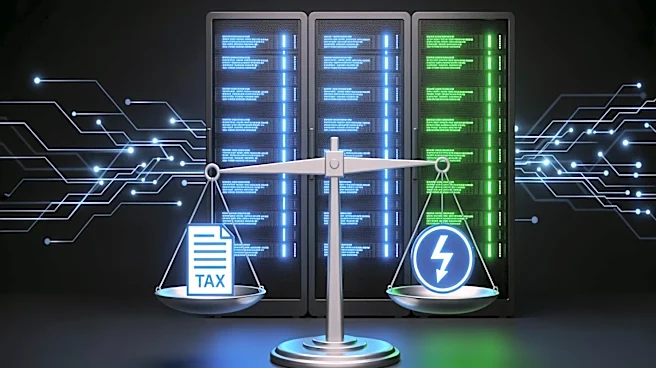
data centers by half, establish new water-use standards, and require these facilities to cover their connection costs. The legislation has sparked debate, with the Ohio Chamber of Commerce warning that reducing the tax exemption could make Ohio less competitive, potentially deterring an industry that has been economically beneficial. Conversely, environmental groups and local residents argue that the bill does not go far enough in addressing their concerns. The bill would not affect existing agreements with major companies like Amazon, Google, and Meta, which have contracts extending into the 2050s. It also proposes creating a separate category for data center customers, requiring utilities to develop special rates for them, a move opposed by some industry groups who argue it is unfair to single out one type of customer.
Why It's Important?
The outcome of this vote could significantly impact Ohio's economic landscape and its attractiveness to the data center industry. By potentially reducing tax incentives, Ohio risks losing its competitive edge in attracting new data center projects, which have been a source of economic growth and job creation. On the other hand, the bill addresses environmental and infrastructure concerns by requiring data centers to contribute to the costs of new power lines and substations, which could alleviate the financial burden on other utility customers. The legislation also introduces water-use standards, reflecting growing environmental concerns about the industry's impact on local resources. The decision will likely influence future policy discussions on balancing economic incentives with environmental and community impacts.
What's Next?
If passed, the bill will set a precedent for how Ohio regulates its burgeoning data center industry. The legislation's implementation will require utilities to develop new rate structures for data centers, potentially leading to further regulatory adjustments. Stakeholders, including industry groups, environmental advocates, and local communities, will likely continue to engage in discussions to refine these regulations. The bill's progress will be closely monitored by other states considering similar measures, potentially influencing broader national policy trends in data center regulation.
Beyond the Headlines
The proposed regulations highlight a broader tension between economic development and environmental sustainability. As data centers continue to expand, their substantial energy and water demands pose challenges for local infrastructure and resources. The bill's focus on water-use standards and infrastructure costs reflects a growing awareness of these issues. However, the lack of clear enforcement mechanisms and comprehensive studies on long-term impacts suggests that further policy development is needed. This situation underscores the importance of creating balanced regulations that support economic growth while protecting environmental and community interests.