




What's Happening?
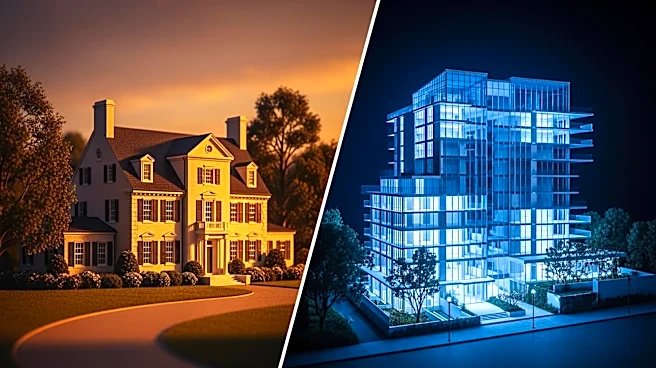
The ultra-luxury housing market in the U.S. is characterized by ambitious asking prices that often exceed actual sale values. Notable listings include a $400 million Bel-Air megamansion and a $300 million estate in Aspen, both of which remain unsold.
These properties test the limits of what the wealthiest buyers are willing to pay, with many listings failing to achieve their headline valuations. In contrast, the most expensive homes sold, such as the $238 million penthouse at 220 Central Park South, highlight the gap between asking prices and completed sales. The market is defined by a reality gap, with listings pushing toward $400 million while sales close below $250 million.
Why It's Important?
The disparity between asking prices and actual sales in the ultra-luxury market underscores the challenges of valuing high-end properties. This reality gap reflects broader economic conditions, including the concentration of wealth and the speculative nature of luxury real estate. For sellers, the high asking prices may deter potential buyers, while buyers face the challenge of justifying such investments. The market dynamics also highlight the importance of pricing discipline and negotiation in achieving successful sales. The trend may influence future luxury real estate strategies and the perception of value in the high-end market.
Beyond the Headlines
The ultra-luxury market's focus on aspirational pricing raises questions about the sustainability of such valuations and the potential impact on broader real estate trends. The emphasis on unique features and historical significance in marketing these properties suggests a shift toward intangible value propositions. Additionally, the market's reliance on a limited buyer pool highlights the vulnerability of luxury real estate to economic fluctuations and changes in wealth distribution. As the market evolves, stakeholders may need to reassess their approaches to pricing, marketing, and investment in ultra-luxury properties.