
What's Happening?
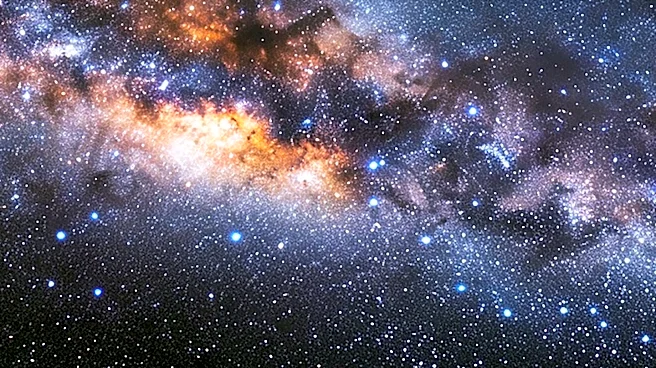
Stargazers in the Northern Hemisphere are in for a treat as the new moon phase beginning on March 18 provides optimal conditions for viewing the Milky Way. During this period, the absence of moonlight
will reduce celestial light interference, making the Milky Way more visible. The Milky Way, a faint band of light composed of billions of stars, is best observed from March to September. According to Capture the Atlas, the Milky Way is visible from sunset to sunrise, with the darkest skies occurring between midnight and 5 a.m. The core of the Milky Way becomes particularly visible starting in June, appearing as a hazy light arching across the sky. Stargazers can locate the Milky Way by identifying the Summer Triangle, a formation of three bright stars that spans the galaxy.
Why It's Important?
The visibility of the Milky Way offers a unique opportunity for both amateur and professional astronomers to observe and study our galaxy. This period of enhanced visibility can inspire interest in astronomy and science, encouraging educational activities and public engagement with the night sky. The event also has cultural significance, as it connects people with the natural world and the universe beyond. For communities and businesses involved in astronomy tourism, this period can boost local economies by attracting visitors seeking clear skies and celestial views.
What's Next?
As the new moon phase progresses, stargazers are encouraged to take advantage of the dark skies to observe the Milky Way. Astronomy clubs and observatories may organize events and viewing parties to facilitate public engagement. Additionally, the upcoming months will offer more celestial events, such as meteor showers, which can further enhance interest in stargazing. The continued visibility of the Milky Way will provide ongoing opportunities for scientific observation and public education.