
What's Happening?
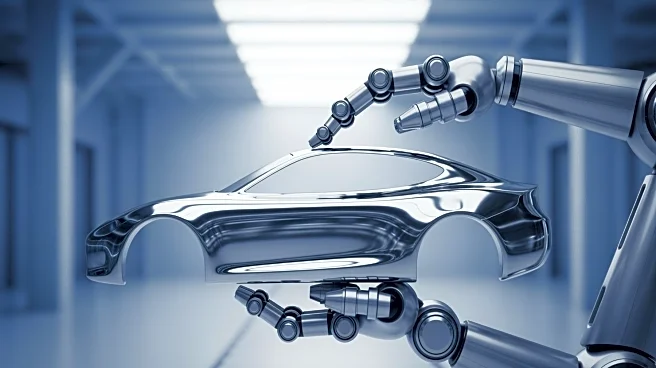
Tesla has announced plans to cease production of its Model S and Model X vehicles next quarter, as part of a strategic shift towards developing autonomous technology and robotics. CEO Elon Musk revealed this decision during a recent earnings call, highlighting the company's transition from a hardware-centric automaker to a 'physical AI' company. The Model S and Model X, which have been key to Tesla's success in the premium electric vehicle market, will be replaced by the production of the Optimus humanoid robot. This move aligns with Tesla's broader goal of advancing autonomous technology and robotics, with plans to produce 1 million Optimus robots annually at its Fremont, California facility.
Why It's Important?
Tesla's decision to discontinue its longest-running
electric vehicles marks a significant shift in its business strategy, reflecting the company's commitment to leading in the field of autonomous technology. This move could reshape the automotive industry, as Tesla sets a precedent for integrating AI and robotics into its core operations. The transition also poses challenges, as the success of the Optimus robot and other AI initiatives remains uncertain. Tesla's ability to innovate and deliver on its ambitious goals will be crucial in maintaining its market position and investor confidence.
What's Next?
As Tesla phases out the Model S and Model X, the company will focus on scaling up production of the Optimus robots and advancing its autonomous vehicle technology. The Fremont facility will be repurposed to accommodate these new production lines. Stakeholders will be watching closely to see how Tesla navigates this transition and whether it can successfully commercialize its AI and robotics initiatives. The company's future growth will depend on its ability to execute this strategic shift and capitalize on emerging opportunities in the autonomous technology sector.