








What's Happening?
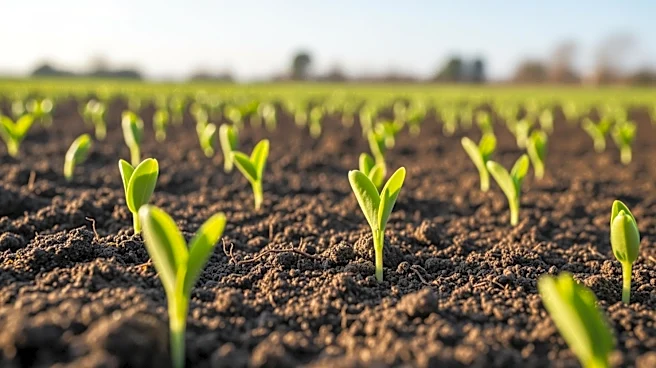
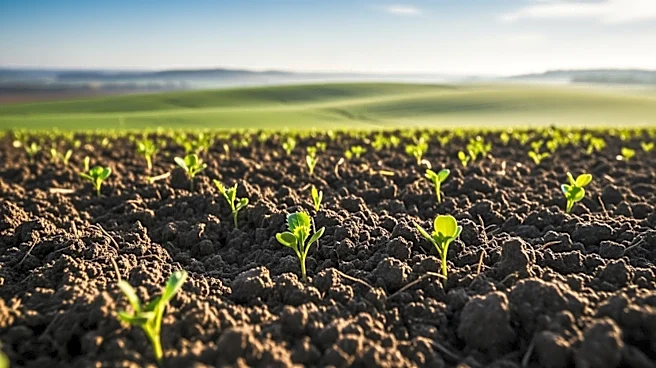
Louis Dreyfus Company (LDC) and PepsiCo have announced an expansion of their regenerative agriculture initiative in Saskatchewan, Canada. This program is designed to enhance sustainable canola production, which is used in PepsiCo products across the United
States and Canada. The initiative aims to help farmers adopt regenerative and restorative agriculture practices to improve soil health, reduce greenhouse gas emissions, and support local ecosystems. In 2025, the program supported 16 farmers across 25,000 acres, producing approximately 26,000 tons of canola. The companies plan to expand the initiative to 45,000 acres in 2026. Participating growers receive training and technical support through the Canadian Prairies Trusted Advisor Partnership, which offers science-based guidance for implementing these practices. The program's outcomes will be measured using the Cool Farm Tool, a platform for estimating and tracking farm-level emissions and biodiversity indicators.
Why It's Important?
This partnership between LDC and PepsiCo is significant as it addresses the growing need for sustainable agricultural practices in response to climate challenges affecting crops and farmer livelihoods. By promoting regenerative agriculture, the initiative aims to enhance the resilience of food and agricultural supply chains. This approach not only benefits the environment by improving soil health and reducing emissions but also supports farmers by providing them with the tools and knowledge to implement sustainable practices. The expansion of this program could serve as a model for other regions and industries looking to adopt similar practices, potentially leading to broader changes in agricultural methods and supply chain management.
What's Next?
As the initiative expands to cover more acreage, the focus will be on accelerating the adoption of regenerative practices across Saskatchewan. The data-driven approach using the Cool Farm Tool will allow for continuous monitoring and refinement of farm management strategies. This could lead to further collaborations between agricultural companies and food producers, aiming to scale sustainable practices globally. Stakeholders, including farmers, environmental groups, and policymakers, may closely watch the outcomes of this initiative to assess its effectiveness and potential for replication in other regions.