
What's Happening?
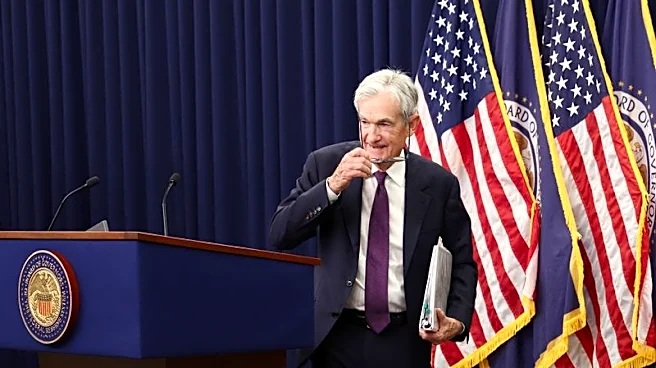
The Federal Reserve is expected to maintain the federal funds rate within the range of 3.5% to 3.75% during its latest meeting, which may be the last under Jerome Powell's leadership. This decision comes
amid heightened concerns over inflation, driven by rising global energy prices due to ongoing geopolitical tensions, particularly the U.S.-led conflict with Iran. The closure of the Strait of Hormuz has significantly increased oil prices, further exacerbating inflationary pressures. The Fed's preferred inflation measure is currently above its 2% target, with expectations of further increases. Despite strong job growth and a lower unemployment rate, the Fed is cautious about signaling any potential rate hikes, focusing instead on maintaining stability in the face of economic uncertainties.
Why It's Important?
The Fed's decision to hold interest rates steady reflects a cautious approach to managing inflation without stifling economic growth. This move is significant as it highlights the central bank's balancing act between controlling inflation and supporting employment. The decision also underscores the challenges faced by incoming Fed leader Kevin Warsh, who will need to navigate these economic pressures while maintaining policy stability. The outcome of this meeting could influence market expectations and investor confidence, particularly in sectors sensitive to interest rate changes, such as housing and consumer finance. The Fed's stance will also impact the broader economic outlook, as it seeks to mitigate the effects of external shocks on domestic inflation and growth.
What's Next?
With Jerome Powell's tenure as Fed chair ending soon, the focus will shift to Kevin Warsh's leadership and his approach to monetary policy. The Senate is expected to confirm Warsh in time for the Fed's June meeting. As geopolitical tensions continue to influence global energy prices, the Fed will closely monitor inflation trends and economic indicators to adjust its policy stance as needed. The central bank's future decisions will likely depend on the evolving economic landscape, including labor market conditions and international developments. Stakeholders will be watching for any shifts in the Fed's policy direction under Warsh's leadership, particularly regarding potential rate adjustments.