
What's Happening?
Multinational companies are increasingly opting for puzzle-based team experiences in Japan as a means to improve communication, leadership, and decision-making among their teams. Traditional corporate
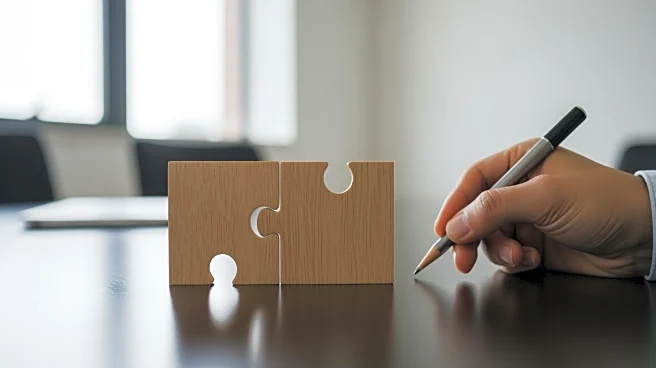
retreats, which often rely on icebreakers and casual workshops, are being replaced by structured problem-solving challenges. These experiences are designed to reveal real team dynamics by placing participants in high-pressure situations that require active coordination and decision-making. Invite Japan, a corporate team-building provider, has noted a growing trend among global organizations seeking these experiential formats to better understand team behaviors and improve collaboration across diverse and distributed teams.
Why It's Important?
The shift towards puzzle-based team experiences reflects a broader trend in corporate team development, emphasizing real-world collaboration over traditional morale-boosting activities. As companies operate across various time zones and cultures, the need for effective communication and leadership becomes critical. These experiences provide insights into team dynamics that are often hidden in low-stakes environments, allowing organizations to address communication gaps and improve decision-making processes. This approach is particularly beneficial for U.S. and Singapore-based companies with regional teams in Asia, as it offers a practical way to align leadership and project teams that rarely meet in person.
What's Next?
As interest in puzzle-based team experiences grows, more companies are likely to integrate these formats into their leadership programs and regional offsites. The focus will be on creating shared reference points that teams can use to enhance collaboration long after the experience ends. Japan's neutral and structured environment will continue to be a preferred setting for these activities, offering a balance of novelty and predictability that supports effective team building. Companies may also explore similar experiential learning opportunities in other regions to further enhance their global team dynamics.