
What's Happening?
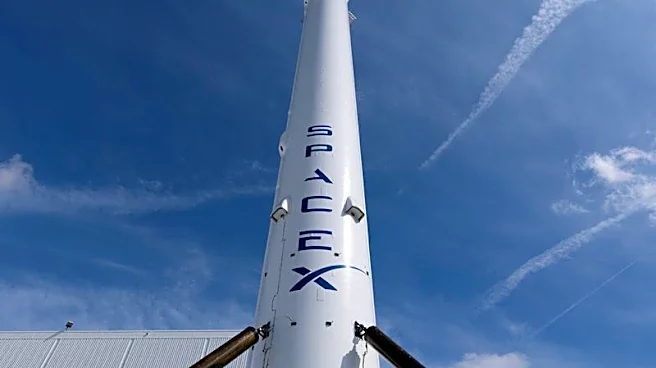
SpaceX completed its 50th orbital launch of 2026, deploying another batch of Starlink satellites from Vandenberg Space Force Base. This milestone underscores SpaceX's rapid launch cadence, with the company
on track to match its record-setting pace from 2025. The majority of SpaceX's launches are dedicated to expanding its Starlink constellation, which now includes nearly 10,300 active satellites. This vertical integration allows SpaceX to maintain a high launch frequency, leveraging its reusable Falcon 9 boosters to reduce costs and increase efficiency.
Why It's Important?
SpaceX's ability to sustain such a high launch frequency positions it as a dominant force in the commercial space industry. The company's strategy of using its own rockets to deploy its satellite network provides a significant competitive advantage, allowing it to control costs and schedule. This dominance challenges other launch providers, who struggle to match SpaceX's cost-effectiveness and launch cadence. The expansion of the Starlink network also has significant implications for global internet access, potentially transforming telecommunications by providing widespread connectivity.
What's Next?
SpaceX plans to continue its aggressive launch schedule, with upcoming missions including a Falcon Heavy launch and further Starship test flights. The success of these missions will be crucial for SpaceX's long-term goals, including supporting NASA's Artemis program and further expanding the Starlink network. The company's ability to maintain its launch pace will also influence the broader commercial space market, as competitors seek to adapt to SpaceX's disruptive business model.