
What's Happening?
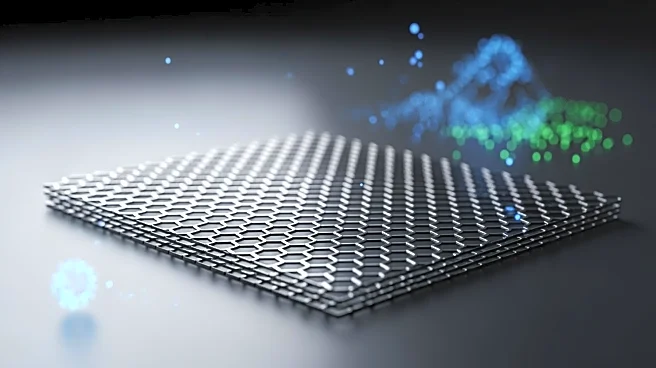
Researchers from the Korea Advanced Institute of Science and Technology (KAIST) have discovered the mechanism by which graphene oxide exhibits selective antibacterial properties. The study, published in Advanced Functional Materials, reveals that graphene oxide can
destroy bacterial membranes while leaving human cells unharmed. This is achieved through the oxygen functional groups on graphene oxide, which selectively bind to a component found only in bacterial cell membranes, known as POPG. This discovery is significant as it provides molecular-level proof of graphene's antibacterial action, which was previously not well understood. The research highlights the potential of graphene oxide as a next-generation antibacterial material that is safe for human use and capable of replacing traditional antibiotics.
Why It's Important?
The findings from this study have significant implications for various industries, particularly in the development of antibacterial products that are safe for human use. The ability of graphene oxide to selectively target bacteria without harming human cells opens up possibilities for its application in medical textiles, consumer products, and wearable devices. This technology is already being utilized in products such as antibacterial toothbrushes and textiles used in sportswear, demonstrating its commercial viability. The study's insights could lead to the development of safer, chemical-free antibacterial solutions, potentially reducing reliance on traditional antibiotics and addressing issues related to antibiotic resistance.
What's Next?
The application of graphene oxide in consumer products and industrial fields is expected to expand. The technology has already been incorporated into products like the graphene antibacterial toothbrush and textiles used in international sporting events. Future developments may include its use in wearable devices and medical textile systems, offering a wide range of applications. As the understanding of graphene oxide's antibacterial mechanism deepens, further innovations in product development and new market opportunities are likely to emerge, potentially transforming the landscape of antibacterial materials.
Beyond the Headlines
The study not only highlights the antibacterial potential of graphene oxide but also underscores the importance of developing sustainable and biocompatible materials. By providing a safer alternative to traditional antibiotics, graphene oxide could play a crucial role in addressing global health challenges such as antibiotic resistance. The research also emphasizes the need for continued exploration of nanomaterials and their applications in various fields, paving the way for future advancements in material science and technology.