



What's Happening?
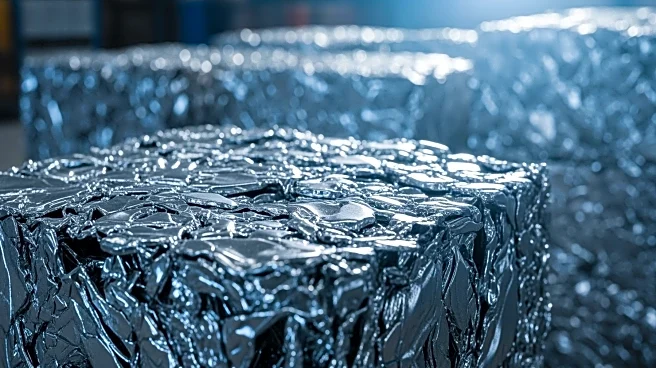
The global aluminium scrap market has evolved significantly, with recycled aluminium production reaching 41.7 million tonnes in 2024. This shift highlights the critical role of secondary materials in supporting global aluminium consumption. The market dynamics
are influenced by production capacity limitations, regional consumption patterns, and technological innovations. The Asia-Pacific region leads in market share due to its industrial demand and processing infrastructure. Trade policy volatility and geopolitical factors create uncertainties in international scrap flows, necessitating flexible sourcing strategies for market participants.
Why It's Important?
The transformation of recycled aluminium into a foundational component of global supply chains underscores its importance in reducing energy consumption and carbon footprints. Recycled aluminium processing requires 95% less energy than primary production, offering cost and environmental benefits. The market's evolution is driven by the need for sustainable practices and regulatory support for circular economy initiatives. The Asia-Pacific region's dominance and the strategic importance of recycled aluminium in meeting decarbonisation targets highlight the sector's potential impact on global manufacturing and environmental policies.
What's Next?
Future market evolution will focus on sustainability integration and decarbonisation pathways. The role of recycled aluminium in achieving industrial emission reduction targets will become increasingly critical. Regulatory frameworks supporting recycling infrastructure development and circular economy integration will drive investment in processing technology and collection infrastructure. Market participants will need to adapt to trade policy changes and geopolitical supply chain resilience requirements, emphasizing diversified sourcing and processing capacity across multiple regions.
Beyond the Headlines
The aluminium scrap market's growth is not just about meeting current demand but also about addressing long-term supply security and quality maintenance challenges. Advanced processing techniques and technology development are essential for managing contamination and alloy degradation over multiple recycling cycles. The integration of digital technologies and automated sorting systems will support sustained market growth and efficiency improvements, ensuring the market's resilience and adaptability to future challenges.