







What's Happening?
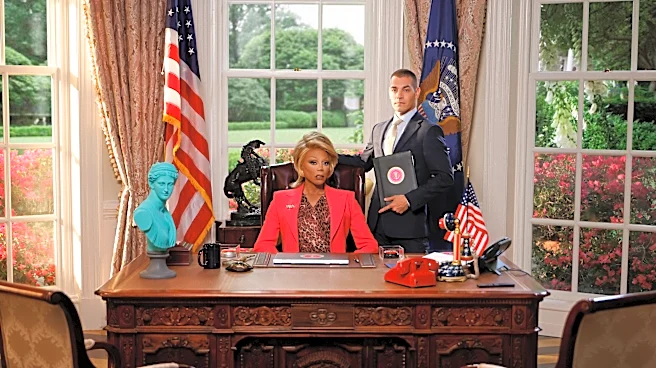
The film 'Stop! That! Train!' features RuPaul as President Judy Gagwell in a comedic disaster movie spoof. Directed by Adam Shankman, the film is noted for its rapid-fire jokes and absurd humor. RuPaul's character, reminiscent of political figures like
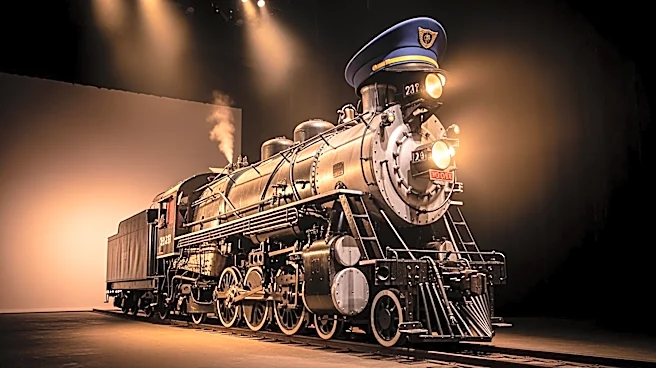
Hillary Rodham Clinton and Kamala Harris, navigates a crisis involving a runaway train headed towards a catastrophic storm, humorously dubbed 'Stormaganza.' The film also stars Ginger Minj and Jujubee as Tess and DeeDee, two friends and train hostesses who find themselves on a luxury train filled with eccentric passengers. The narrative unfolds with a mix of slapstick comedy and satirical takes on disaster movie tropes, with a screenplay by Connor Wright and Christina Friel.
Why It's Important?
The film's release highlights the ongoing trend of blending comedy with political satire, offering audiences a humorous escape while subtly critiquing political and social norms. RuPaul's role as a fictional president adds a layer of cultural commentary, reflecting on the intersection of entertainment and politics. The film's comedic approach to serious themes like disaster management and political leadership may resonate with audiences seeking light-hearted content amidst real-world challenges. Additionally, the inclusion of popular drag performers like Ginger Minj and Jujubee underscores the growing mainstream acceptance and celebration of drag culture in entertainment.
What's Next?
As 'Stop! That! Train!' hits theaters, it may spark discussions on the effectiveness of comedy in addressing political and social issues. The film's reception could influence future projects that aim to blend humor with political commentary. Audience reactions and box office performance will likely determine the viability of similar comedic ventures in the future. Additionally, the film may inspire further collaborations between mainstream cinema and drag performers, expanding representation and diversity in the film industry.
Beyond the Headlines
The film's satirical take on political leadership and disaster management may prompt viewers to reflect on real-world political dynamics and crisis responses. By using humor to address these themes, the film encourages audiences to question and critique the status quo in a non-threatening manner. This approach can foster a more engaged and informed public, potentially influencing public discourse and attitudes towards political figures and policies.