
What's Happening?
ONE Society, an initiative led by Jewish-Israeli philanthropist Irina Nevzlin and French economist Bruno Roche, was recently presented at the Wharton School at the University of Pennsylvania. The initiative seeks
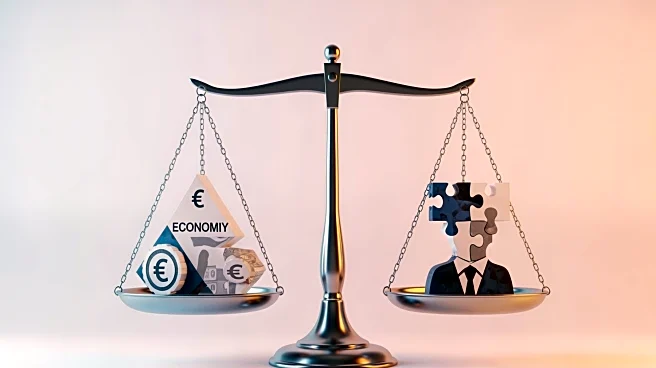
to address societal polarization by fostering trust through economic incentives and shared identity. The framework encourages businesses, cities, and institutions to measure 'value' in broader terms, considering the impact of decisions on employees, communities, and social stability. Roche's approach, developed during his tenure as chief economist at Mars, emphasizes the 'Economics of Mutuality,' which advocates for mutual gains for organizations and their surrounding communities. Nevzlin highlights the importance of identity in addressing polarization, suggesting that a strong sense of identity can facilitate cooperation and trust. The initiative has been tested in global companies and is being piloted in cities like Marseille, France.
Why It's Important?
The ONE Society initiative is significant as it addresses the growing issue of polarization, which affects politics, workplaces, and educational institutions. By promoting a broader understanding of value that includes social stability and trust, the initiative aims to create more cohesive and resilient communities. This approach could potentially reshape how businesses and institutions operate, encouraging them to prioritize long-term societal benefits over short-term profits. The initiative's focus on identity and trust is particularly relevant in today's climate, where societal divisions are increasingly pronounced. If successful, the framework could lead to more inclusive and equitable economic systems, benefiting a wide range of stakeholders, including employees, local communities, and businesses.
What's Next?
The ONE Society initiative plans to continue its pilot programs in various cities and collaborate with organizations like the Boston Consulting Group to develop practical tools for implementing its framework. As the initiative gains traction, it may influence how business leaders and policymakers approach issues of trust and identity in their respective fields. The success of these pilots could lead to broader adoption of the framework, potentially transforming how value is perceived and measured in economic and social contexts. Stakeholders, including businesses, governments, and civil society groups, may need to adapt to these new metrics and consider their implications for long-term planning and decision-making.
Beyond the Headlines
The initiative's emphasis on identity and trust highlights deeper cultural and ethical dimensions of economic systems. By integrating these elements into business practices, the ONE Society framework challenges traditional notions of capitalism and value creation. This approach could lead to a shift in how organizations define success, prioritizing social cohesion and community well-being alongside financial performance. Additionally, the initiative's focus on identity may prompt discussions about cultural diversity and inclusion, encouraging organizations to embrace and leverage these aspects for mutual benefit. As the framework evolves, it may also influence educational curricula, shaping how future leaders are trained to think about value and societal impact.