






What's Happening?
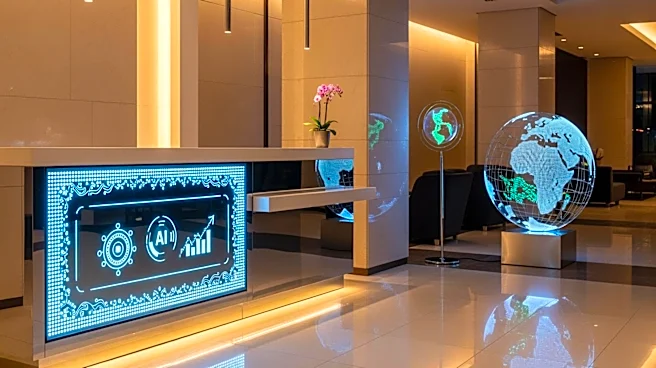
The NYU International Hospitality Industry Investment Conference (IHIF) highlighted key trends in the hospitality sector, focusing on the resilience of consumer spending and travel despite economic challenges. Discussions centered around the role of artificial
intelligence (AI), branded residential developments, and the importance of brand conversions. The conference noted that while transaction activity is lagging, the gap between buyers and sellers is narrowing. The luxury travel segment continues to show strong performance, with significant investment interest due to its resilience against geopolitical and economic factors. The conference also emphasized the need for creative capital stacks and the importance of understanding market demand when considering brand conversions.
Why It's Important?
The insights from the NYU IHIF reflect broader trends in the hospitality industry, where resilience in consumer spending and travel is crucial for recovery. The focus on AI and branded residential developments indicates a shift towards leveraging technology and unique experiences to attract consumers. The narrowing buyer-seller gap suggests a potential increase in transaction activity, which could stimulate further investment in the sector. The emphasis on luxury travel highlights the segment's ability to withstand economic pressures, making it an attractive investment opportunity. These trends could influence future strategies for hotel operators and investors, impacting the industry's growth and adaptation to changing consumer preferences.
Beyond the Headlines
The conference's focus on AI and branded residential developments suggests a long-term shift towards integrating technology and unique experiences in hospitality offerings. AI's role in enhancing operational efficiency and customer experience could become increasingly important as the industry adapts to new consumer expectations. The popularity of branded residential components indicates a growing trend towards mixed-use developments that offer both hospitality and residential experiences. This approach could redefine traditional hotel models and create new opportunities for revenue generation. Additionally, the emphasis on brand conversions highlights the importance of aligning hotel offerings with market demand to capture greater market share.