



What's Happening?
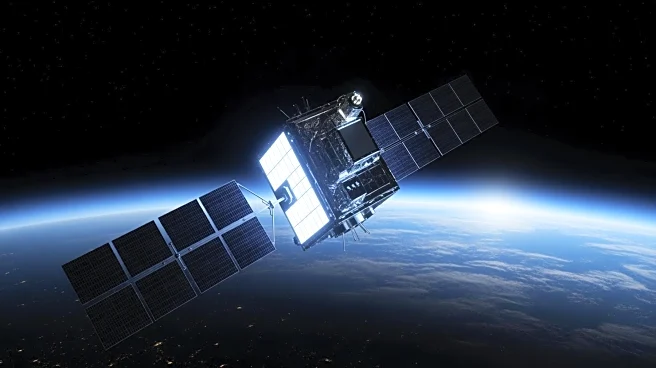
Rocket Lab successfully launched the NEONSAT-1A satellite into orbit on January 29, 2026, using its Electron rocket from Launch Complex 1 in New Zealand. The launch, initially scheduled for December 2025, faced delays but ultimately succeeded. NEONSAT-1A, developed by the Korea Advanced Institute of Science and Technology (KAIST), is part of a constellation of 11 satellites designed to capture high-resolution images of the Earth's surface, focusing primarily on the Korean Peninsula. This marks the second successful Electron launch by Rocket Lab in 2026, following a previous launch on January 22.
Why It's Important?
The successful deployment of NEONSAT-1A enhances South Korea's capabilities in Earth observation, providing critical data for environmental monitoring,
urban planning, and disaster management. For Rocket Lab, this launch underscores its growing role in the commercial space sector, demonstrating reliability and efficiency in satellite deployment. The mission's success also highlights the increasing collaboration between international space agencies and private companies, fostering advancements in satellite technology and space exploration.
What's Next?
Rocket Lab plans to continue its launch schedule, with more missions anticipated throughout the year. The NEONSAT constellation will gradually expand, enhancing its imaging capabilities. This development may prompt further collaborations between Rocket Lab and international clients, potentially leading to more frequent and diverse satellite launches. The data collected by NEONSAT-1A will be analyzed to support various applications, including climate research and national security.