






What's Happening?
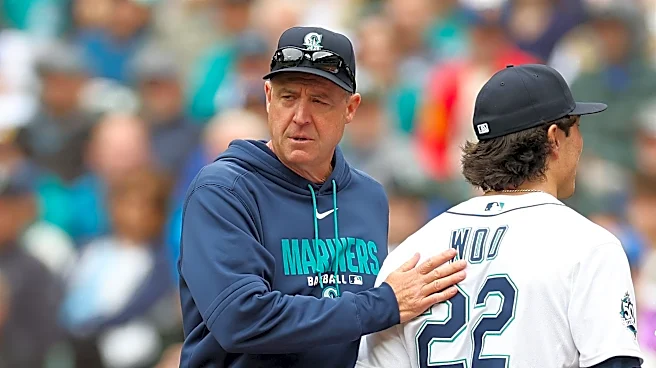
The Seattle Mariners are facing challenges with their second base depth as Ryan Bliss, a key player expected to back up Cole Young, is off to a difficult start in the 2026 season with Triple-A Tacoma. Bliss, who was seen as a potential internal solution
for the Mariners, has struggled offensively, hitting just .184/.244/.255 with a .499 OPS over 35 games. This performance is a stark contrast to his promising 2024 season, where he showcased his potential with a .269/.377/.456 line and significant contributions in speed and on-base ability. Bliss's current struggles are compounded by his recovery from a torn left biceps and a torn meniscus, which limited his playtime in 2025. His slow start raises concerns about the Mariners' depth at second base, especially as his defensive flexibility is limited compared to other options like Leo Rivas.
Why It's Important?
The performance of Ryan Bliss is crucial for the Mariners as they seek reliable depth behind Cole Young at second base. Bliss's struggles could impact the team's strategic options, particularly in late-game situations where defensive flexibility is key. The Mariners' decision to prioritize other players like Patrick Wisdom over Bliss highlights the importance of having a versatile bench. Bliss's inability to perform as expected could force the Mariners to explore external options or adjust their roster strategy, potentially affecting their competitiveness in the league. The situation underscores the challenges teams face in balancing player development with immediate performance needs, especially when injuries disrupt a player's progression.
What's Next?
The Mariners will likely continue to monitor Bliss's performance closely, hoping for improvement as he regains form post-injury. If Bliss fails to recover his previous form, the team may need to consider alternative strategies, such as seeking trades or promoting other players from within their farm system. The Mariners' management will have to weigh the benefits of patience with Bliss's development against the immediate need for a reliable backup at second base. This decision-making process will be critical as the season progresses and the team aims to maintain its competitive edge.