
What's Happening?
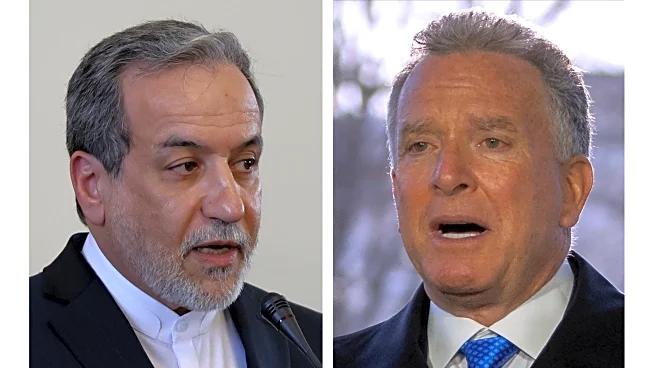
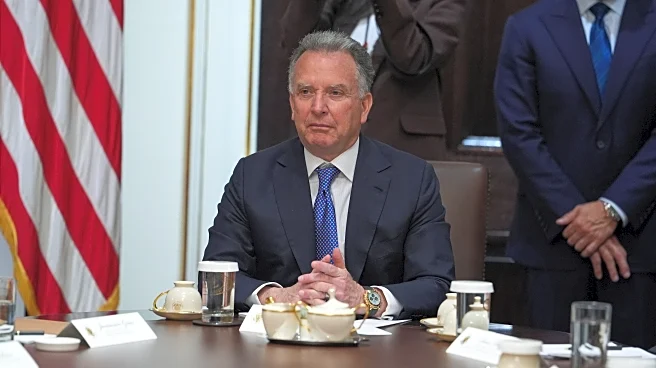
Avner Stepak, Chairman of Meitav Dash, has emphasized the importance of business leaders taking a public stand on significant issues, particularly in the context of rising tensions between Iran and Israel.
Stepak, who has a history of involvement in public debates and philanthropy, argues that silence is not an option for those in leadership positions. He outlines three potential scenarios regarding the Iran situation: a confrontation limited to Iran and the U.S. and its allies, a scenario with limited impact on Israel, and a transformative regime change in Tehran. Despite the risks, Stepak remains confident in the resilience of the Israeli markets, drawing on his experience in managing Meitav Dash through various challenges. His leadership style is characterized by a commitment to social responsibility, as evidenced by his philanthropic efforts and public engagement.
Why It's Important?
Stepak's stance highlights a growing expectation for business leaders to engage in societal issues beyond their corporate responsibilities. His approach underscores the potential influence of corporate leaders in shaping public discourse and policy, particularly in politically sensitive contexts. This perspective is significant as it challenges the traditional separation between business and politics, suggesting that leaders have a role in addressing broader societal challenges. Stepak's actions may inspire other business leaders to adopt similar approaches, potentially leading to increased corporate involvement in public policy and social issues. This shift could have implications for how businesses are perceived by the public and their stakeholders, potentially affecting their reputation and market position.
What's Next?
As tensions with Iran continue, the response from business leaders like Stepak could influence public opinion and policy decisions. If more leaders follow Stepak's example, there could be a shift towards greater corporate activism in Israel and beyond. This could lead to increased pressure on governments to consider the perspectives of the business community in their decision-making processes. Additionally, Stepak's focus on philanthropy and social responsibility may encourage other leaders to prioritize these areas, potentially leading to increased support for social initiatives and nonprofit organizations.
Beyond the Headlines
Stepak's emphasis on philanthropy and social responsibility reflects a broader trend towards integrating ethical considerations into business practices. His belief in the importance of emotional intelligence and social engagement in leadership suggests a shift towards more holistic approaches to management. This could have long-term implications for leadership development and corporate culture, as businesses increasingly recognize the value of social responsibility and ethical leadership. Stepak's actions also highlight the potential for business leaders to drive positive social change, challenging the notion that profit and social good are mutually exclusive.