



What's Happening?
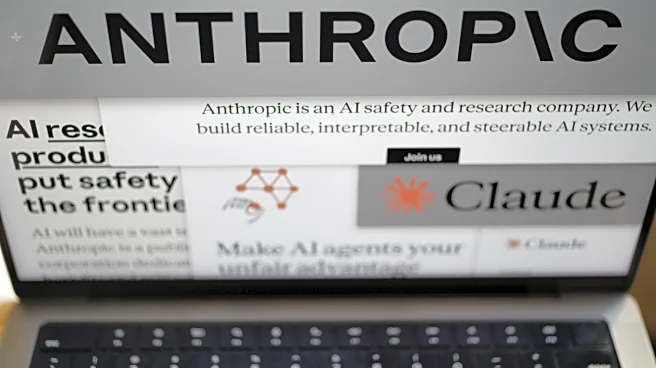
Anthropic, an artificial intelligence company, has rejected the Pentagon's demand for full access to its AI tool, Claude, due to ethical concerns. The Pentagon had set a deadline for Anthropic to comply with its terms, which included potential use in fully
autonomous weapons and mass domestic surveillance. Anthropic's CEO, Dario Amodei, stated that the company cannot agree to these terms as they conflict with its ethical guidelines. The disagreement stems from the Pentagon's broad remit for using AI in warfighting, which Anthropic believes could undermine democratic values. The Pentagon has not explicitly prohibited the use of AI in autonomous weapons or mass surveillance, leading to a standoff with Anthropic.
Why It's Important?
This standoff highlights the growing tension between technological innovation and ethical considerations in military applications. The refusal by Anthropic to comply with the Pentagon's demands underscores the ethical dilemmas faced by tech companies when their products are used for military purposes. The outcome of this dispute could set a precedent for how AI technologies are integrated into national defense strategies. It raises questions about the balance between national security and ethical responsibility, potentially influencing future contracts and collaborations between tech firms and the military.
What's Next?
If Anthropic and the Pentagon cannot reach an agreement, the company risks being excluded from future military contracts. The Pentagon may seek alternative AI providers willing to comply with its terms. This situation could prompt other tech companies to reevaluate their own policies regarding military collaborations. The Defense Production Act could be invoked to force compliance, but this would likely lead to further legal and ethical debates. The resolution of this conflict will be closely watched by industry stakeholders and policymakers.