




What's Happening?
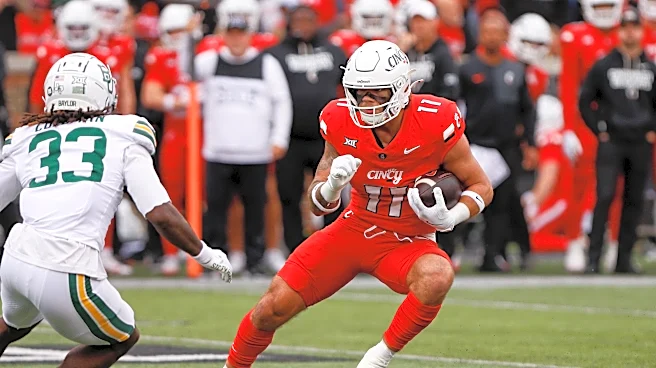
Texas Tech quarterback Brendan Sorsby has enlisted the services of Jeffrey Kessler, a prominent attorney known for representing high-profile sports figures, to challenge the NCAA's investigation into his gambling activities. Sorsby, who transferred from
Cincinnati and secured a significant NIL deal reportedly worth over $5 million, is facing potential ineligibility after admitting to placing numerous bets over the past three years. The NCAA's scrutiny has put his upcoming season in jeopardy, prompting Sorsby to consider alternative paths, including the possibility of entering the NFL's supplemental draft. This legal battle highlights the increasing complexities surrounding college athletes' rights and the implications of NIL agreements.
Why It's Important?
The case of Brendan Sorsby underscores the evolving landscape of college athletics, particularly in the context of NIL deals and athlete conduct. The outcome of this legal challenge could set a precedent for how the NCAA handles similar cases in the future, potentially influencing the regulatory framework governing college sports. For Texas Tech, the situation presents a significant challenge as they may need to adjust their roster plans if Sorsby is deemed ineligible. Additionally, the involvement of a high-profile attorney like Jeffrey Kessler signals the seriousness of the case and could attract further attention to the broader issues of athlete rights and NCAA regulations.
What's Next?
If Sorsby is unable to regain his eligibility, he may pursue entry into the NFL's supplemental draft, a move that would require a decision by June 30. Meanwhile, Texas Tech is preparing for the possibility of starting the season without Sorsby, with former four-star recruit Will Hammond ready to step in as quarterback. The NCAA's decision on Sorsby's eligibility will be closely watched, as it could have implications for other athletes facing similar situations. The case also raises questions about the NCAA's approach to gambling-related infractions and the potential need for policy adjustments in response to the growing influence of NIL agreements.