


What's Happening?
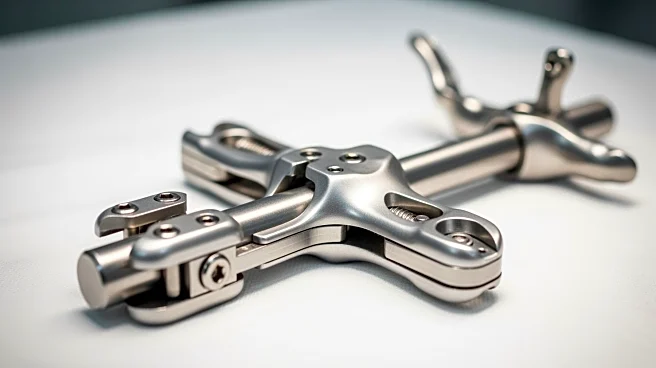
Stryker, a leader in medical technologies, has introduced Synchfix EVT, a next-generation flexible syndesmotic fixation device. This device is designed to simplify surgical procedures while providing stabilization for patients with syndesmotic disruptions,
commonly associated with sports injuries and ankle fractures. Synchfix EVT builds on the existing Synchfix platform, offering design improvements that reduce procedural complexity. It features an all-in-one system with integrated suture tensioning handles and a handle design for one-handed deployment. The device is intended for soft tissue and bone fixation in ankle syndesmosis disruptions, with or without fractures, and is the first of its kind approved for adolescent use. The system has been recognized with the Red Dot Design Award for its innovative design. Stryker is showcasing Synchfix EVT at the American College of Foot and Ankle Surgeons Annual Meeting.
Why It's Important?
The launch of Synchfix EVT is significant as it addresses the need for more efficient and effective surgical solutions for ankle syndesmotic injuries, which can severely impact mobility and recovery. By simplifying the surgical process and expanding treatment options to include adolescents, Stryker is enhancing patient care and potentially improving recovery outcomes. This development is crucial for healthcare providers, as it offers a more streamlined approach to treating complex ankle injuries, which are prevalent in sports and active lifestyles. The device's recognition with a design award underscores its potential to set new standards in surgical technology, benefiting both surgeons and patients.
What's Next?
Stryker plans to demonstrate the capabilities of Synchfix EVT at the ACFAS meeting, highlighting its features and benefits to foot and ankle surgeons. The company is likely to continue gathering feedback from healthcare professionals to further refine and improve its offerings. As the device gains traction in the medical community, it may lead to broader adoption and potentially influence the development of similar technologies in orthopedic surgery. Stakeholders, including surgeons and healthcare institutions, will be closely monitoring the device's performance and patient outcomes to assess its long-term impact on surgical practices.