







What's Happening?
Jibril Rajoub, the head of the Palestinian Football Association, is in Mexico City, waiting for a U.S. visa to attend the 2026 FIFA World Cup. Despite being invited, Rajoub and other international delegates have faced visa denials or delays from the U.S. government.
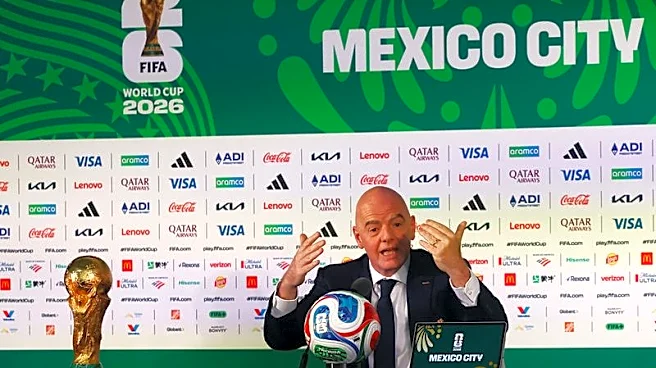
The Palestinian team did not qualify for the tournament, but FIFA invites global football association leaders to foster international unity. FIFA President Gianni Infantino has acknowledged the issue, stating that while efforts are being made to resolve it, FIFA cannot override U.S. governmental decisions. The U.S. has also denied entry to other delegates, including a Somali referee and an Iraqi team photographer.
Why It's Important?
This visa denial highlights the intersection of sports and international politics, emphasizing the challenges faced by global events in politically sensitive environments. The U.S. government's decision could affect its diplomatic relations and the perception of its role as a host nation. The situation raises broader questions about the inclusivity of international events and the responsibilities of host countries to facilitate participation from all invited parties, potentially impacting future hosting decisions and international sports diplomacy.
What's Next?
FIFA continues to address the visa challenges, but the U.S. government's policies remain a significant barrier. This issue may lead to discussions on the criteria for hosting international events and the obligations of host nations to ensure access for all participants. The resolution of these visa disputes could influence future international sports event planning and cooperation.