


What's Happening?
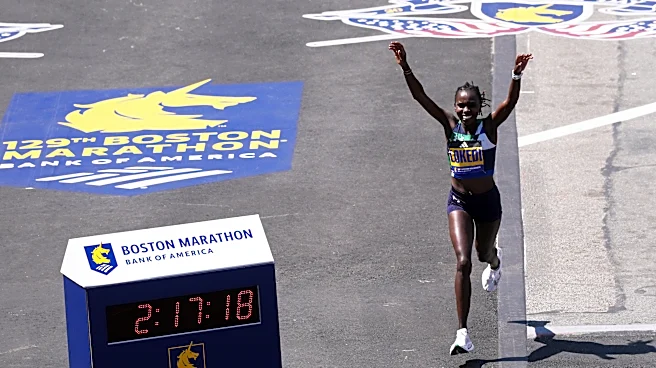
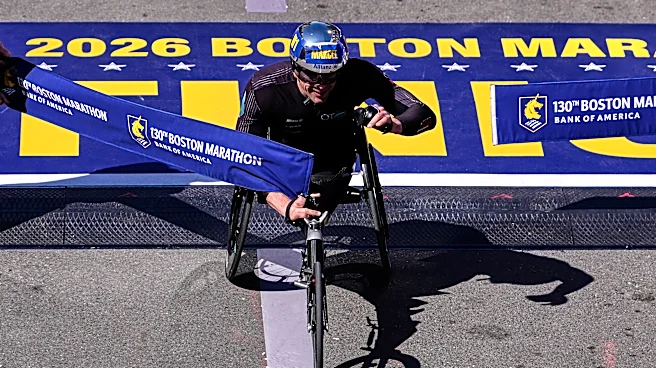
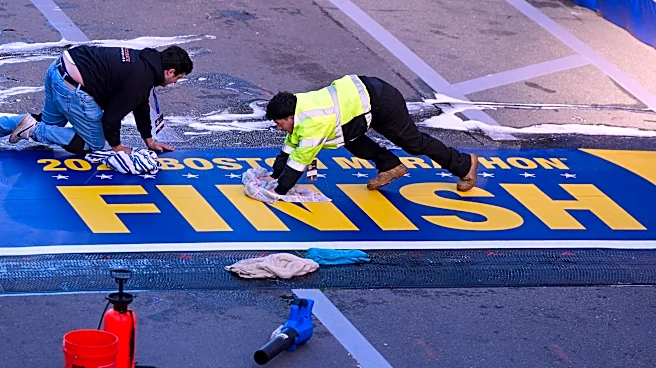
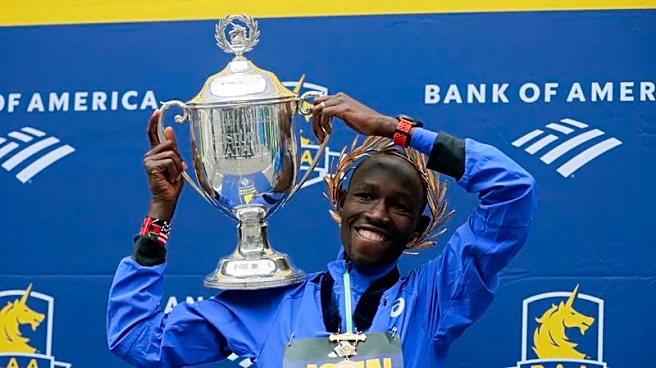
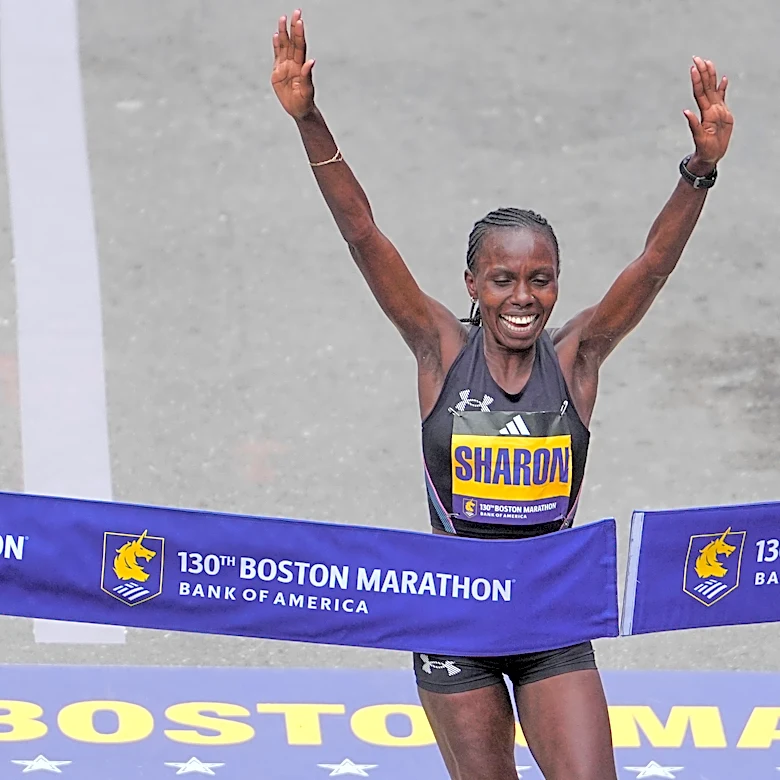
John Korir, the defending champion, won the Boston Marathon for the second consecutive year, setting a new course record. Korir completed the marathon in 2 hours, 1 minute, and 52 seconds, surpassing the previous record set by Geoffrey Mutai in 2011 by 70
seconds. The race featured a strong field, with Alphonce Felix Simbu of Tanzania finishing 55 seconds behind Korir, and Benson Kipruto, the 2021 champion, finishing another 3 seconds behind Simbu. Zouhair Talbi, a Moroccan-born runner who became a U.S. citizen last year, finished fifth with the best time ever for a U.S. runner at 2:03:45. The marathon started in Hopkinton with temperatures in the 30s, warming to 45 degrees by the start, under clear skies and a slight tailwind, contributing to the fast times.
Why It's Important?
Korir's victory and record-setting performance highlight the competitive nature and prestige of the Boston Marathon, one of the world's oldest and most respected annual marathons. His achievement underscores the high level of international competition and the marathon's ability to attract elite athletes from around the globe. The event also showcases advancements in marathon running, with athletes consistently pushing the boundaries of speed and endurance. For the U.S., Talbi's performance as the fastest American runner signifies the growing competitiveness of American athletes in international marathon events.
What's Next?
Following Korir's record-breaking win, the Boston Marathon may continue to attract top-tier international athletes aiming to break records and achieve personal bests. The event organizers might consider further innovations to enhance the race experience, such as crowd management strategies to prevent bottlenecks. Additionally, the success of runners like Talbi could inspire more American athletes to compete at higher levels in future marathons, potentially increasing the U.S. presence in international marathon competitions.
Beyond the Headlines
The Boston Marathon's history and tradition play a significant role in its prestige, and Korir's victory adds to the narrative of remarkable achievements in the event's long history. The introduction of a statue honoring marathon pioneer Bobbi Gibb reflects a growing recognition of women's contributions to the sport. This development may encourage further efforts to celebrate diversity and inclusion within marathon running, promoting broader participation across different demographics.