

What's Happening?
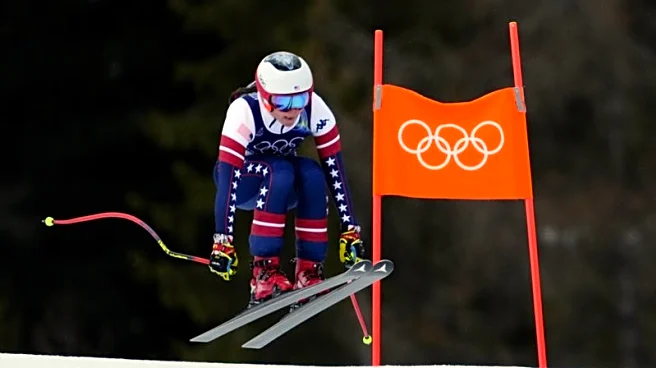
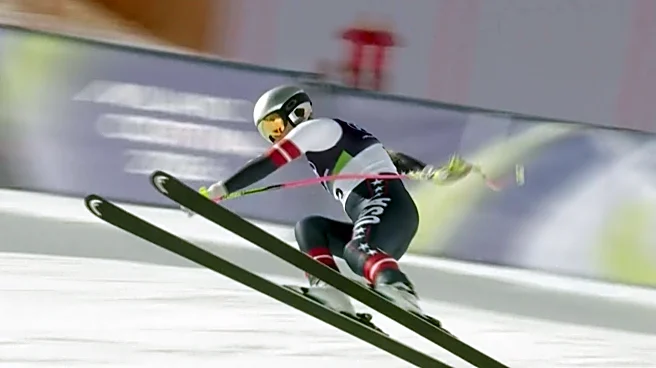
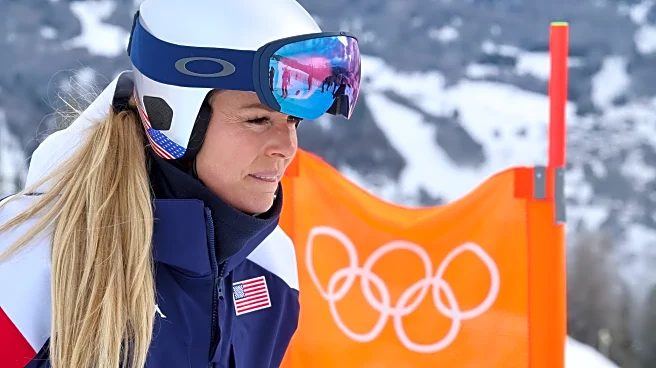
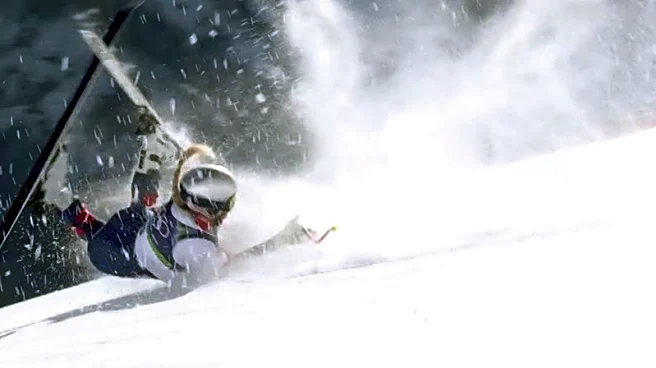
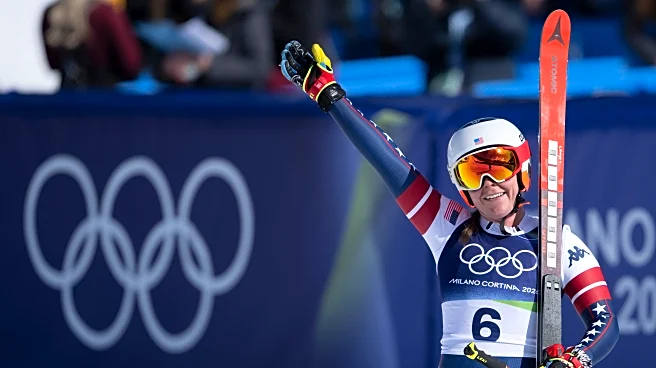
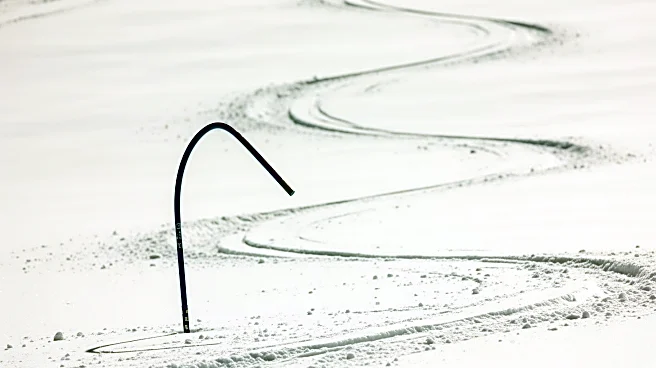
During the 2026 Milan Cortina Olympics, the fourth gate at the Tofane Alpine Skiing Center has proven to be a challenging obstacle for skiers. Two days after Lindsey Vonn's dramatic crash, which resulted in a potentially career-ending broken leg, her teammate Bella Wright also encountered difficulties at the same gate during the women's combined event. Wright, aiming for a more aggressive approach following a 21st place finish in the downhill, lost her balance near the gate. Although she did not crash, she veered off course, ending her run prematurely. Breezy Johnson, another American skier, managed to avoid the gate and completed the fastest run of the session, setting up teammate Mikaela Shiffrin for the slalom portion.
Why It's Important?
The repeated issues
with the fourth gate highlight the technical challenges faced by athletes in high-stakes competitions like the Olympics. For the U.S. team, the incident underscores the unpredictability and risk inherent in alpine skiing, potentially affecting team morale and strategy. The gate's difficulty could influence future course designs and safety measures. Additionally, Vonn's crash and Wright's misstep may impact the U.S. team's overall performance and medal prospects, emphasizing the need for adaptability and resilience in competitive sports.
What's Next?
As the Olympics continue, athletes and coaches will likely reassess their strategies to navigate the challenging course. The U.S. team may focus on refining techniques and adjusting lines to avoid similar incidents. Organizers might also review the course setup to ensure athlete safety. The outcomes of these events could prompt discussions on course design standards and athlete preparation for future competitions.