







What's Happening?
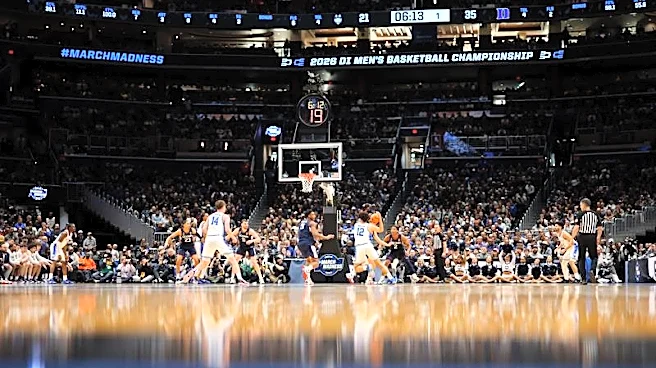
Duke University has entered into a groundbreaking three-game streaming agreement with Amazon, which includes a high-profile basketball game against Michigan at Madison Square Garden. This deal, facilitated by Duke in collaboration with the ACC and ESPN,
marks a significant shift as streaming giants like Amazon begin to acquire rights traditionally held by linear broadcasters. However, the Big Ten Conference, backed by its primary rights holder Fox, has raised concerns, asserting ownership over the broadcast rights for the Duke-Michigan game. The Big Ten claims that under a previous agreement, it holds the rights to neutral-site games in shared territories like New York City. This has led to a dispute with the ACC and ESPN, who are aligned with Duke's decision to license the game to Amazon.
Why It's Important?
This development is significant as it highlights the growing influence of streaming platforms in the sports broadcasting landscape, traditionally dominated by networks like ESPN and Fox. The deal represents a potential shift in how college sports are monetized, with schools like Duke exploring lucrative streaming agreements to enhance their financial and marketing strategies. The dispute underscores the complexities of broadcast rights agreements, especially in shared territories, and could set a precedent for future negotiations between conferences and streaming services. The outcome of this disagreement could impact how college sports are broadcasted and monetized, affecting stakeholders including universities, conferences, and media companies.
What's Next?
The resolution of this rights dispute remains uncertain, with officials from the Big Ten, ACC, Fox, and ESPN declining to comment. The outcome will likely depend on negotiations between the involved parties, potentially involving legal or contractual clarifications. If unresolved, this could lead to further disputes as more schools and conferences explore streaming deals. The situation may prompt conferences to revisit and possibly renegotiate their existing broadcast agreements to accommodate the growing role of streaming platforms. Stakeholders will be closely monitoring the situation, as it could influence future media rights strategies and partnerships in college sports.