






What's Happening?
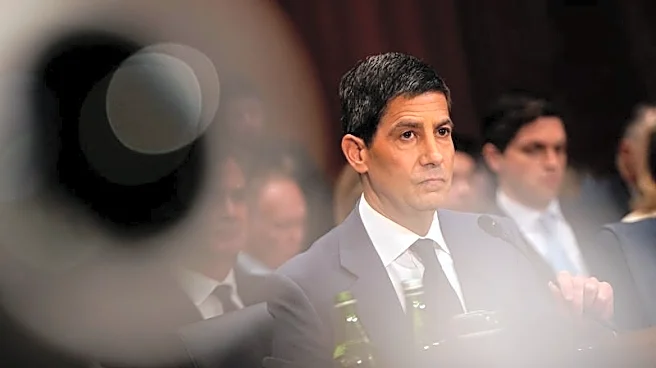
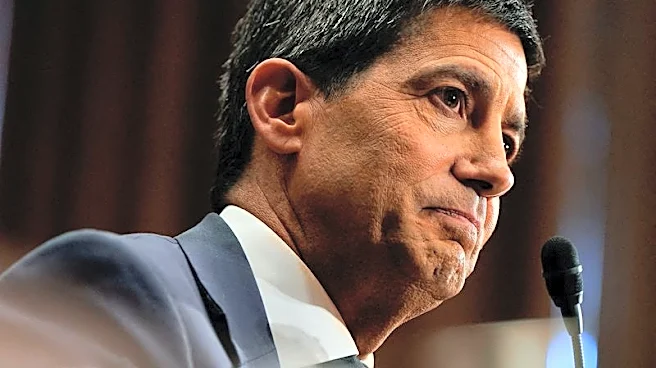
The Federal Reserve is on the brink of a leadership change as Kevin Warsh is set to take over as the new chair following the end of Jerome Powell's term. This transition comes amid significant inflationary pressures, with recent data showing a 3.8% rise
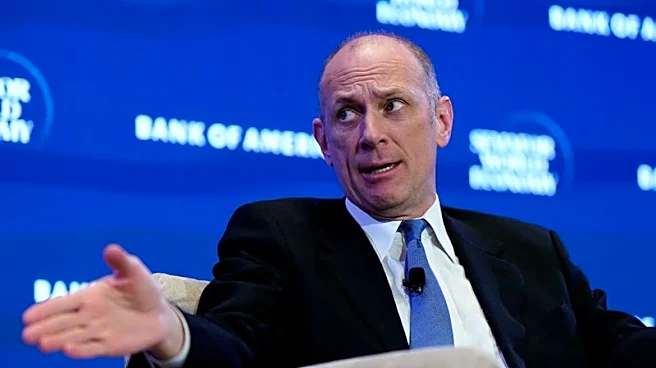
in consumer prices over the past year, marking the fastest pace since 2023. Treasury Secretary Scott Bessent has expressed optimism that inflation will ease soon, despite recent spikes in consumer and wholesale prices. Bessent attributes the current inflation surge to energy supply shocks, particularly due to geopolitical tensions, but believes these are transient. He anticipates that the U.S. will continue to increase oil production, which should help alleviate some of the inflationary pressures.
Why It's Important?
The Federal Reserve's approach to managing inflation is crucial for the U.S. economy, affecting everything from interest rates to consumer purchasing power. The transition to Kevin Warsh as chair could signal a shift in monetary policy, especially if inflation begins to subside as predicted by Bessent. A reduction in inflation could lead to more stable economic conditions, potentially influencing the Federal Reserve's decisions on interest rates. This is particularly significant for businesses and consumers who have been grappling with higher costs. The Fed's ability to manage inflation effectively will be critical in maintaining economic stability and growth.
What's Next?
As Kevin Warsh assumes leadership of the Federal Reserve, all eyes will be on his policy decisions, especially regarding interest rates. If inflation begins to decrease as anticipated, Warsh may have the opportunity to adjust the Fed's monetary policy to support economic growth. However, if inflation persists, the Fed may need to maintain or even increase interest rates to curb rising prices. The economic community will be closely monitoring upcoming inflation data and the Fed's response to these developments.