


What's Happening?
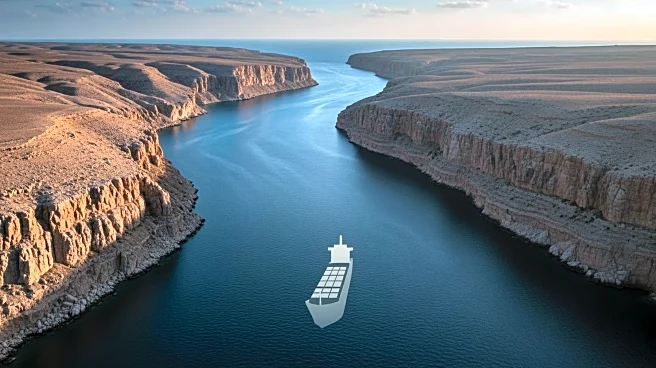
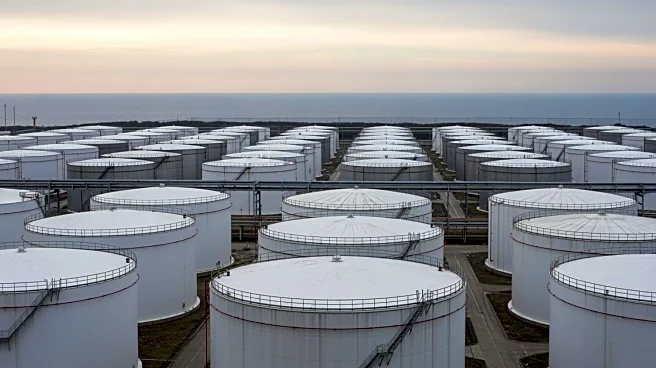
Kuwait has announced a reduction in oil production due to storage capacity constraints, a direct consequence of the ongoing tensions in the Strait of Hormuz. The Kuwait Petroleum Corporation (KPC) has stated that this measure is precautionary and will
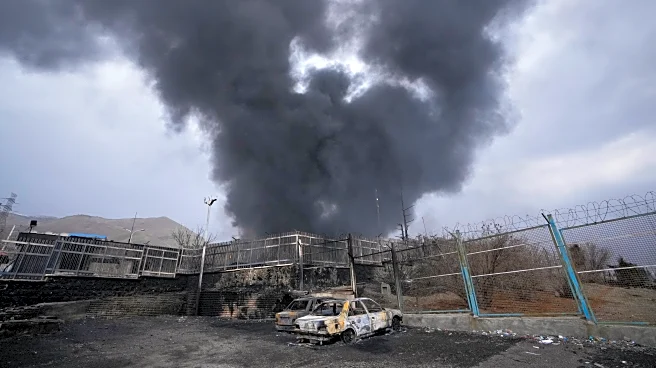
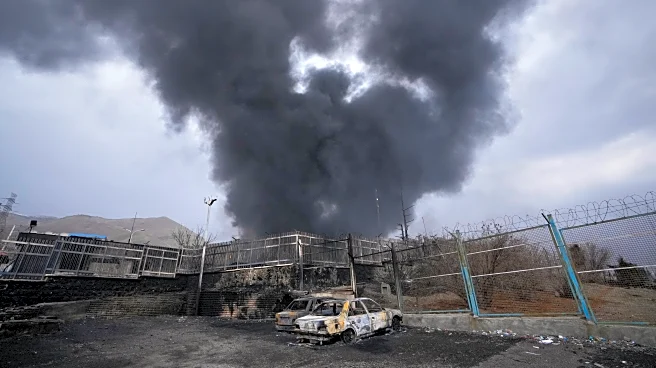
be reviewed regularly. The decision comes as Iran continues to enforce its closure order of the Strait, attacking vessels and disrupting oil shipments. Despite these challenges, KPC assures that domestic market supplies remain secure and that production levels will be restored once conditions improve. The reduction in output is part of a broader regional trend, with Iraq also cutting production significantly due to similar storage issues.
Why It's Important?
The reduction in oil output by Kuwait and other Gulf Cooperation Council (GCC) countries highlights the vulnerability of global oil supply chains to geopolitical tensions. The Strait of Hormuz is a critical passage for oil exports, and its closure or disruption can lead to significant economic repercussions worldwide. The potential for oil prices to spike to $150 per barrel, as warned by Qatari Energy Minister Saad al-Kaabi, underscores the urgency for alternative routes or solutions to ensure energy security. The situation also emphasizes the need for international cooperation to address the underlying geopolitical issues and prevent further escalation.
What's Next?
As the situation in the Strait of Hormuz remains tense, major oil-exporting nations may be forced to declare force majeure if the shutdown continues. This would further strain global oil supplies and potentially lead to higher prices. The international community may need to engage in diplomatic efforts to resolve the conflict and ensure the security of oil shipments. Additionally, countries may explore increasing domestic production or seeking alternative energy sources to mitigate the impact of the supply disruptions.