


What's Happening?
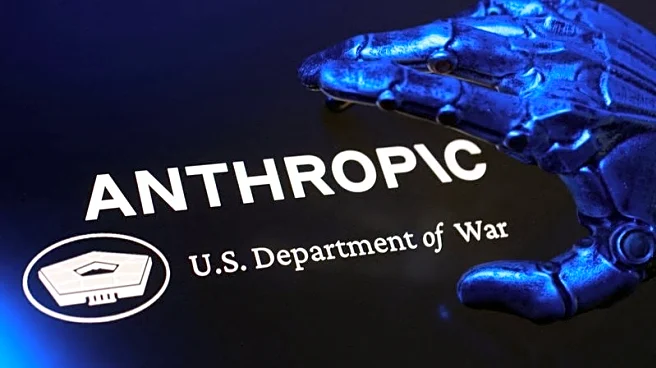
The Department of Defense (DOD) has officially designated Anthropic, an American artificial intelligence company, as a supply chain risk. This designation, typically reserved for foreign adversaries, marks the first time an American company has been publicly
named as such. The decision stems from ongoing disputes between Anthropic and the Pentagon over the use of the company's AI models, known as Claude. The DOD seeks unrestricted access to these models for all lawful military purposes, while Anthropic has expressed concerns about their use in fully autonomous weapons and domestic mass surveillance. Despite the designation, the DOD has reportedly used Anthropic's models in military operations related to the conflict in Iran. Anthropic has announced plans to challenge the designation in court.
Why It's Important?
This development highlights the growing tension between technology companies and government agencies over the use of artificial intelligence in military applications. The designation of Anthropic as a supply chain risk could have significant implications for the company's business operations, particularly in its dealings with defense contractors and vendors. It underscores the challenges tech companies face in balancing ethical considerations with government demands for access to advanced technologies. The outcome of this dispute could set a precedent for how AI technologies are integrated into military operations and influence future collaborations between tech firms and the government.
What's Next?
Anthropic plans to contest the supply chain risk designation in court, which could lead to a legal battle over the extent of government access to AI technologies. The case may attract attention from other tech companies and civil rights groups concerned about the implications of unrestricted government use of AI. The Pentagon's stance suggests it will continue to push for access to advanced technologies, potentially leading to further conflicts with tech firms prioritizing ethical considerations. The resolution of this case could impact future policies on AI use in military contexts and influence the regulatory landscape for tech companies.