






What's Happening?
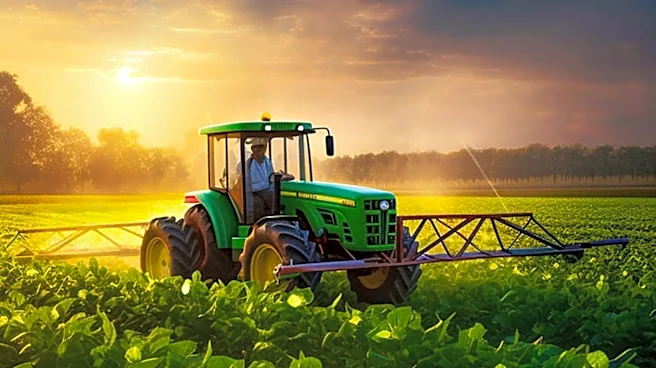
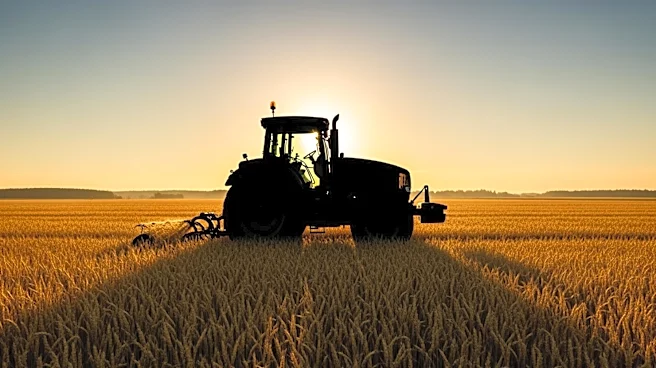
Yanmar Agribusiness Co., Ltd., a subsidiary of Yanmar Holdings Co., Ltd., has introduced four new models in its YT4S/5S Series tractor lineup. These tractors are designed to enhance efficiency and precision in agricultural operations, addressing the needs
of large-scale farmers and agricultural enterprises. The new models are equipped with high-output engines and RTK-GNSS technology, which aids in reducing operator workload and improving productivity through accurate straight-line operations. The tractors also feature a redesigned front exterior with high-intensity LED lighting to improve visibility and operator safety. The launch comes as the agricultural sector faces challenges such as farmland consolidation and labor shortages due to an aging farming population.
Why It's Important?
The introduction of the YT4S/5S Series tractors is significant for the agricultural industry, particularly in addressing the growing demand for efficient and precise machinery. As farms consolidate and labor becomes scarcer, the need for advanced equipment that can perform heavy-duty tasks with minimal human intervention becomes critical. These tractors not only promise to enhance productivity but also contribute to sustainable farming practices by optimizing resource use. The integration of RTK-GNSS technology is particularly noteworthy as it allows for centimeter-level accuracy in operations, which is crucial for precision agriculture. This development could lead to increased yields and reduced operational costs for farmers, thereby impacting the agricultural economy positively.
What's Next?
Yanmar's focus on innovation and sustainability suggests that further advancements in agricultural machinery could be on the horizon. The company may continue to develop technologies that enhance the efficiency and precision of farming operations. Additionally, as these tractors become available in more markets, their adoption could influence farming practices globally. Stakeholders in the agricultural sector, including policymakers and industry leaders, may need to consider the implications of such technological advancements on labor markets and agricultural policies.