



What's Happening?
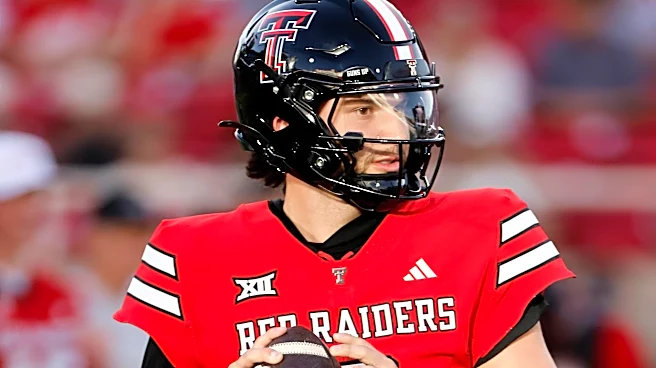
A Lubbock County judge has granted an injunction allowing Texas Tech quarterback Brendan Sorsby to be eligible for the 2026 season despite his involvement in betting on his own team and placing over 8,000 additional wagers. This decision has caused significant
controversy within the college sports community. The ruling prevents the NCAA from enforcing its anti-gambling policy against Sorsby, although it includes a two-game suspension for the quarterback. This unusual court intervention has led to discussions among various athletic directors and conference commissioners about potentially boycotting games against Texas Tech. Schools such as Georgia and Nebraska have already indicated they will not schedule future contests against Texas Tech, citing concerns over the integrity of the game.
Why It's Important?
The court's decision to allow Sorsby to play despite his gambling activities raises significant concerns about the integrity of college sports. It challenges the NCAA's authority to enforce its rules and could set a precedent for future cases involving player misconduct. The potential boycott by other schools highlights the broader implications for college athletics, where maintaining a level playing field and trust in the system is crucial. If more schools join the boycott, it could isolate Texas Tech and impact its ability to compete at a high level, affecting the school's athletic program and its financial health. This situation underscores the tension between state court rulings and national sports governance, potentially leading to a reevaluation of how such cases are handled in the future.
What's Next?
As discussions continue, the Big Ten, Big 12, and SEC are considering a league-wide mandate to not play Texas Tech in any sports. This could lead to a significant shift in college sports scheduling and alliances. The NCAA and other governing bodies may need to address the implications of this ruling and consider revising their policies to prevent similar situations. The outcome of these discussions could influence how colleges and conferences handle issues of player eligibility and misconduct, potentially leading to stricter enforcement of rules and more uniform standards across the board.