



What's Happening?
The FIA, Formula 1's governing body, has announced a revision to the engine compression ratio rule following a technical dispute involving Mercedes and its rivals, including Audi, Ferrari, Red Bull, and Honda. These teams argued that Mercedes gained an advantage
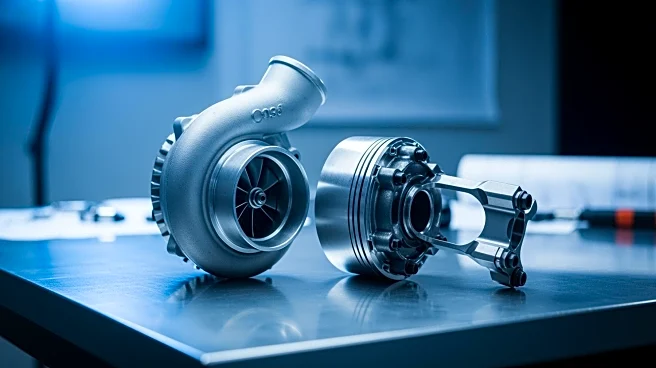
through advanced materials technology, allowing them to optimize engine performance. The original rule limited the compression ratio to 16:1, measured at ambient temperature, a change from the previous 18:1. Mercedes' competitors pushed for this measurement to be taken at operating temperature, believing Mercedes had found a way to minimize performance loss due to thermal expansion. The FIA confirmed that from June 1, the compression ratio will be measured at 130°C, with further changes set for 2027. This decision was unanimously approved by all power-unit manufacturers.
Why It's Important?
This rule change is significant as it addresses competitive balance in Formula 1, ensuring no team gains an undue advantage through technical loopholes. The decision reflects the sport's ongoing efforts to maintain fairness and competitiveness, which is crucial for attracting new manufacturers and retaining existing ones. Audi and Ford's entry into F1, along with Honda's decision to stay, were influenced by the new power-unit rules that emphasize a balance between internal combustion and electrical power. The revision also highlights the importance of regulatory adaptability in response to technological advancements, which can impact team strategies and the overall dynamics of the championship.
What's Next?
The implementation of the new measurement standard on June 1 will likely lead to adjustments in engine design and strategy among teams. Manufacturers will need to adapt to the revised rules, potentially leading to innovations in materials and engineering to optimize performance under the new conditions. The FIA's ongoing evaluation of energy management rules suggests further regulatory changes could be on the horizon, aimed at simplifying energy deployment and recovery processes. Teams will be closely monitoring these developments to ensure compliance and competitive performance in future seasons.