





What's Happening?
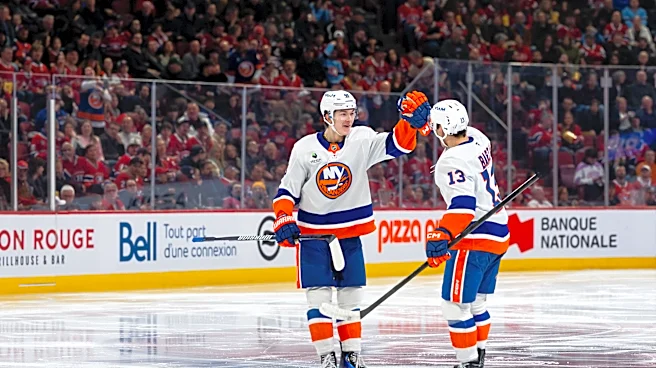
The National Hockey League (NHL) has announced the finalists for the 2025-26 Frank J. Selke Trophy, which honors the forward who best excels in the defensive aspects of the game. The finalists are Anthony Cirelli of the Tampa Bay Lightning, Brock Nelson
of the Colorado Avalanche, and Nick Suzuki of the Montreal Canadiens. Cirelli's performance contributed significantly to the Lightning's strong defensive record, ranking second in the NHL in goal differential and third in goals against. Nelson, in his first full season with the Avalanche, played a crucial role in the team's league-leading defense, helping them achieve the lowest goals against in the NHL. Suzuki led the Canadiens in several defensive categories, contributing to the team's highest point total since the 2014-15 season. The finalists were selected by the Professional Hockey Writers Association, with the top three vote-getters designated as finalists.
Why It's Important?
The announcement of the Selke Trophy finalists highlights the importance of defensive skills in hockey, showcasing players who excel in this often underappreciated aspect of the game. For the teams involved, having players recognized for their defensive prowess underscores their strategic focus on a balanced approach to the game, combining offensive capabilities with strong defensive play. This recognition can enhance the players' reputations and potentially influence contract negotiations and team dynamics. Additionally, the acknowledgment of these players can inspire younger athletes to develop their defensive skills, contributing to the overall evolution of the sport.
What's Next?
The winner of the Frank J. Selke Trophy will be announced at the NHL Awards ceremony, where the league will also reveal the recipients of other prestigious awards. The recognition of these finalists may lead to increased attention and scrutiny of their performances in the upcoming season, as fans and analysts watch to see if they can maintain or improve their defensive contributions. Teams may also look to these players as models for developing their own defensive strategies, potentially influencing coaching decisions and player development programs.