







What's Happening?
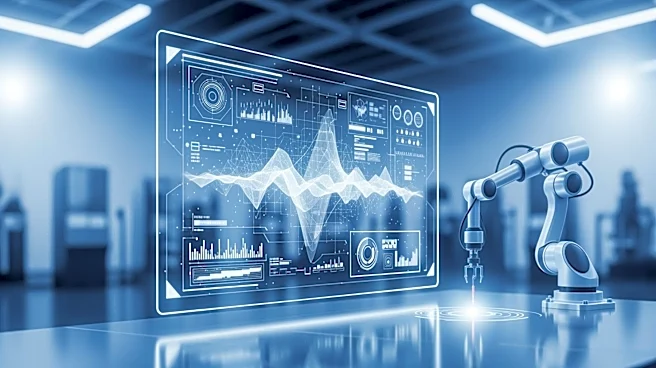
The supply chain industry is undergoing a significant transformation with the integration of AI and generative AI technologies into control tower operations. These advanced systems are evolving from providing mere visibility to enabling prescriptive and autonomous
orchestration of supply chain activities. AI technologies are being used to ingest and interpret vast datasets, allowing for real-time decision-making and scenario simulation. This shift is part of the broader transition from Industry 4.0 to Industry 5.0, where AI and machine learning are not just tools but represent a new operating paradigm. The control towers now act as active decision-making partners, capable of optimizing inventory, transportation, and exception management, thereby enhancing the agility and responsiveness of supply chains.
Why It's Important?
The integration of AI into supply chain control towers is crucial as it addresses the challenges posed by global volatility, such as geopolitical shocks and rapid changes in consumer demand. By enabling real-time insights and proactive decision-making, AI-driven control towers help organizations reduce inefficiencies, lower costs, and improve service levels. This technological advancement is particularly significant for industries like consumer goods and retail, where visibility gaps and fragmented data have historically led to increased costs and inefficiencies. The ability to simulate scenarios and prescribe solutions allows companies to better manage risks and align operations with sustainability goals, ultimately providing a competitive advantage in an unpredictable market.
What's Next?
As AI technologies continue to mature, the next phase for supply chain control towers involves further embedding AI into day-to-day operations to enhance decision-making and accelerate response times. Organizations are expected to invest in robust data governance and change-management programs to upskill their workforce for effective collaboration with AI systems. The focus will be on creating unified data foundations and integrating AI into planning and execution systems to drive measurable impact. This evolution will likely lead to more autonomous supply chain operations, where AI not only supports but actively shapes future supply chain strategies.
Beyond the Headlines
The adoption of AI in supply chain management raises important ethical and governance considerations. Ensuring data privacy and security, as well as addressing potential biases in AI algorithms, will be critical as these technologies become more integrated into business operations. Additionally, the shift towards AI-driven decision-making may require a cultural change within organizations, as employees adapt to new roles that focus more on strategic planning rather than routine tasks. The long-term impact of AI on employment and the skills required in the supply chain industry will also be an area of ongoing discussion and adaptation.