

What's Happening?
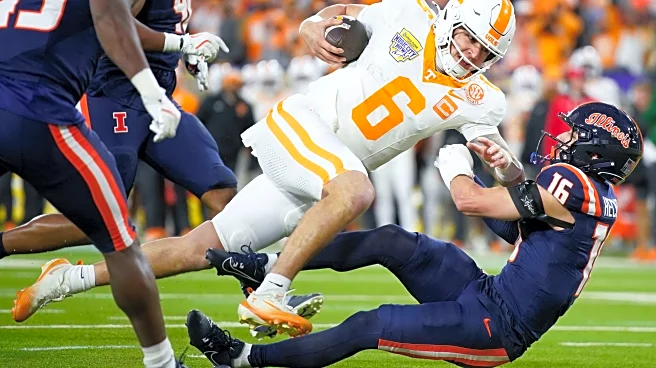
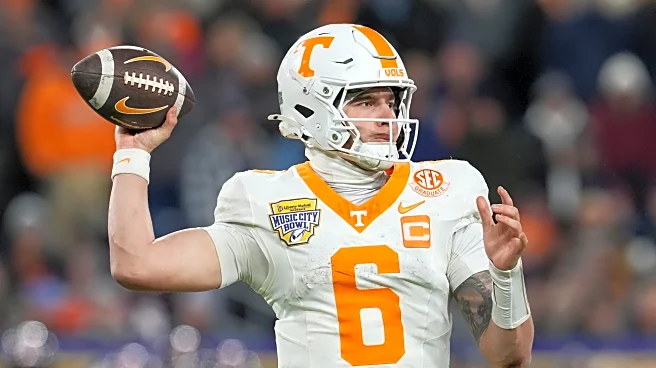
Tennessee quarterback Joey Aguilar has been ruled ineligible to play in the 2026 season after a Knoxville judge denied his request for a preliminary injunction against the NCAA. Aguilar's legal team argued that his time spent at junior colleges should not count against his NCAA eligibility, but the court disagreed. Aguilar had previously been granted a temporary restraining order, allowing him to play in the 2025 season. This decision is a significant setback for Aguilar, who had hoped to follow in the footsteps of other players who successfully extended their eligibility. Aguilar's case was part of a broader legal challenge involving other quarterbacks, but his individual lawsuit was unsuccessful.
Why It's Important?
The ruling has significant implications for
Tennessee's football program, which now faces the challenge of replacing one of its most productive quarterbacks. Aguilar's absence leaves a gap in the team's lineup, as he was a key player in the previous season. The decision also highlights the ongoing complexities and controversies surrounding NCAA eligibility rules, particularly regarding the counting of junior college participation. This case underscores the NCAA's strict adherence to its eligibility criteria, which can impact athletes' careers and team dynamics. Tennessee will now need to rely on less experienced quarterbacks, which could affect their performance in the upcoming season.
What's Next?
With Aguilar's eligibility denied, Tennessee must quickly adapt and identify a new starting quarterback. The team will likely hold a competitive spring training to evaluate potential candidates, including redshirt freshman George MacIntyre and true freshman Faizon Brandon. The decision also sets a precedent for future eligibility cases, potentially influencing how other athletes and programs approach similar legal challenges. Tennessee's coaching staff will need to strategize effectively to maintain their competitive edge in the SEC, and the outcome of this situation could have broader implications for NCAA policies and athlete rights.