
What's Happening?
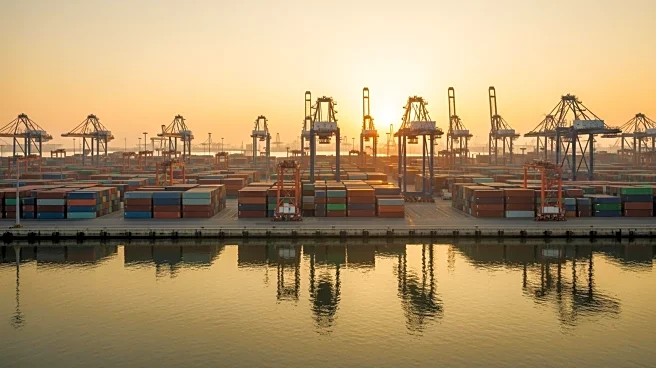
The Port of Los Angeles (POLA) concluded 2025 with significant cargo volume growth, handling 10.2 million TEU (Twenty-Foot Equivalent Units), marking the third highest total in its history. This achievement
was highlighted by POLA Executive Director Gene Seroka during the 11th annual 'State of the Port' event. Despite a slight annual decrease of 0.56%, the port's performance underscores its critical role in the U.S. economy. December's cargo volume saw a 14.1% annual decrease, with imports and exports also declining. Seroka emphasized the importance of cargo movement for American farmers, manufacturers, retailers, and consumers. POLA's 'Building Bigger and Build Smarter' initiative focuses on infrastructure, technology, community, and environmental investments. Key projects include the proposed Pier 500 Marine Container Terminal and the Marine Support Facility, aimed at enhancing capacity and efficiency.
Why It's Important?
The Port of Los Angeles is a vital component of the U.S. supply chain, and its performance directly impacts various economic sectors. The infrastructure projects and technological advancements at POLA are designed to accommodate future cargo demand, improve efficiency, and support sustainability. These developments are crucial for maintaining the port's competitiveness and ensuring smooth freight flow, which is essential for the national economy. The expansion projects are expected to create jobs and enhance the port's ability to handle next-generation cargo ships, thereby supporting economic growth and environmental goals.
What's Next?
POLA's ongoing infrastructure projects, such as the Pier 500 Marine Container Terminal and the Marine Support Facility, are in various stages of development. The port is also working on on-dock rail expansion and collaborating with Fenix Marine Terminal to develop additional land. These initiatives aim to increase capacity and improve operations. The port's focus on sustainability and efficiency will likely continue to drive future developments, with potential impacts on job creation and environmental standards. Stakeholders, including government agencies and industry partners, will play a role in supporting these efforts.