



What's Happening?
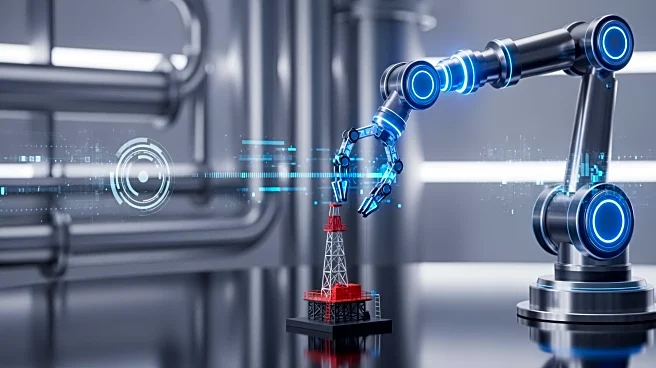
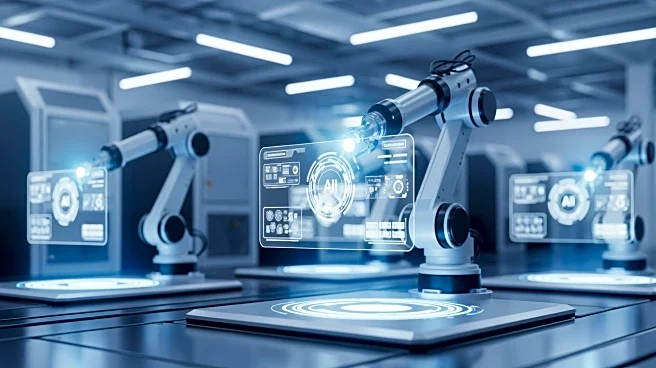
Industrial manufacturing organizations are increasingly adopting artificial intelligence (AI) to enhance their operations and remain competitive in a rapidly changing market. According to a report, 92% of manufacturers believe that smart manufacturing is crucial for maintaining competitiveness. However, many are struggling with outdated systems that are not equipped to handle the current demands of speed, agility, and resilience. AI is being utilized to automate workflows, predict maintenance needs, and forecast inventory requirements, among other applications. Despite the clear benefits, many manufacturers face challenges in scaling AI effectively due to fragmented data and inadequate foundational technology.
Why It's Important?
The integration of AI in industrial
manufacturing is significant as it offers the potential to transform operations by increasing efficiency and reducing downtime. Manufacturers that successfully implement AI can gain a competitive edge by responding more swiftly to market changes and customer demands. The ability to predict and prevent equipment failures and optimize supply chains can lead to substantial cost savings and improved productivity. However, the failure to modernize and fully leverage AI could result in manufacturers falling behind more agile competitors, highlighting the importance of investing in the right infrastructure and technology partnerships.
What's Next?
For industrial manufacturers, the next steps involve bridging the gap between AI ambition and tangible outcomes. This requires integrating AI into a broader digital ecosystem rather than treating it as an isolated solution. Organizations need to focus on building intelligent infrastructure that supports AI-powered workflows and ensures data is utilized effectively. As manufacturers continue to invest in technology, those who prioritize comprehensive digital transformation strategies are likely to see significant productivity gains in the coming years.