



What's Happening?
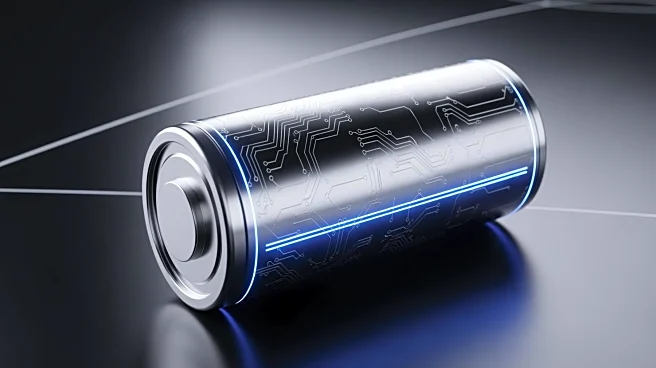
Gangfeng Lithium, a leading supplier of lithium metal, has developed a new battery technology that achieves an energy density of 650 Wh/kg using a hybrid solid-liquid electrolyte. This advancement surpasses the energy density targets set by major companies
like Toyota and Samsung for their upcoming solid-state batteries, which aim for 500 Wh/kg by 2027. The innovative approach involves using lithium alloy electrodes, which enhance mechanical properties and production stability. The hybrid battery technology is initially being applied to drones and humanoid robots, with plans to eventually integrate it into electric vehicles (EVs). The FAW Group, a Volkswagen partner in China, is already testing an electric sedan with this technology, demonstrating its viability.
Why It's Important?
The development of Gangfeng's hybrid battery technology represents a significant leap in energy storage capabilities, potentially transforming the EV industry. By achieving higher energy densities, these batteries can extend the range of electric vehicles, making them more competitive with traditional combustion engines. This could accelerate the adoption of EVs, contributing to reduced carbon emissions and advancing global sustainability goals. Additionally, the hybrid approach offers a cost-effective solution while solid-state battery technologies continue to evolve, providing manufacturers with a practical interim option. The implications for industries reliant on high energy density applications, such as robotics and aerospace, are substantial, potentially leading to more efficient and powerful devices.
What's Next?
Gangfeng's hybrid battery technology is poised to enter mass production, with initial applications in drones and humanoid robots. As the technology proves its viability, it is expected to be integrated into electric vehicles, potentially revolutionizing the automotive industry. Manufacturers may focus on further reducing costs and improving the lifespan of these batteries, while continuing to develop pure solid-state alternatives. The success of this technology could prompt other companies to explore hybrid solutions, fostering innovation and competition in the battery sector. Stakeholders, including automotive manufacturers and tech companies, will likely monitor these developments closely, considering strategic partnerships and investments.
Beyond the Headlines
The hybrid battery technology developed by Gangfeng not only challenges existing energy density limits but also highlights the importance of material science in advancing battery performance. The use of lithium alloy electrodes addresses key challenges such as compositional segregation and mechanical stability, which are critical for reliable battery operation. This innovation underscores the potential for hybrid solutions to bridge the gap between current technologies and future advancements, offering a practical pathway for industries to transition towards more sustainable energy sources. The broader impact on energy storage solutions could lead to significant shifts in how power is managed and utilized across various sectors.