
What's Happening?
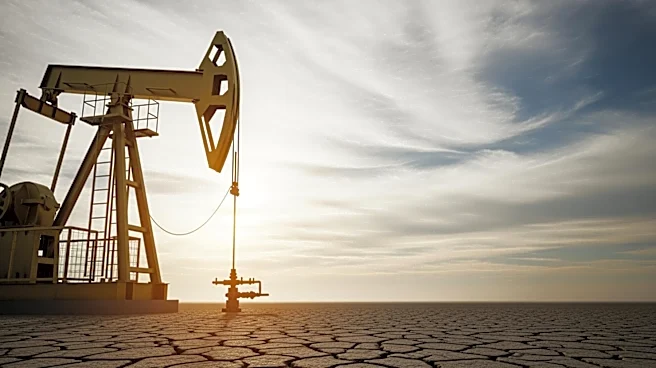
Dallas Federal Reserve President Lorie Logan has indicated that U.S. oil producers are unlikely to increase output in the near term to alleviate rising gasoline prices. Despite the current price of oil being
around $110 a barrel, producers require sustained prices at or above $70 a barrel to justify new investments. Logan's comments come amid the U.S.-Israeli conflict with Iran, which has exacerbated energy price rises and poses challenges for inflation and economic activity. The Federal Reserve is facing difficult trade-offs as it seeks to balance inflation control with job growth. The central bank traditionally views energy price increases as temporary, but the prolonged inflationary period raises concerns about lasting economic impacts.
Why It's Important?
The reluctance of U.S. oil producers to boost output highlights the complexities of the energy market and its impact on consumers. Rising gasoline prices contribute to inflationary pressures, affecting household budgets and economic stability. The Federal Reserve's challenge is to manage these pressures while supporting job growth, a task complicated by geopolitical tensions. The situation underscores the interconnectedness of global events and domestic economic policy, with potential implications for interest rates and monetary policy. Consumers and businesses may face higher costs, influencing spending and investment decisions.
What's Next?
The Federal Reserve is likely to continue monitoring economic indicators and adjust its policy as necessary to address inflation and economic growth. Stakeholders, including policymakers and industry leaders, may explore strategies to stabilize energy prices and support economic resilience. The ongoing conflict in the Middle East remains a critical factor, with potential developments influencing market conditions and policy responses. The Fed's approach will be guided by data and evolving scenarios, with a focus on restoring price stability and supporting sustainable economic growth.