

What's Happening?
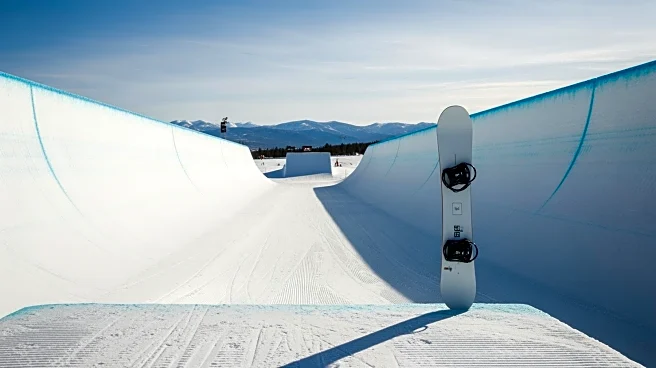
At the 2026 Winter Olympics in Livigno, Italy, Japanese snowboarder Yuto Totsuka secured the gold medal in the men's snowboarding halfpipe event. Totsuka's performance was marked by a series of complex tricks, including back-to-back 1440-degree triple corks, which placed him at the top of the standings. Australian snowboarder Scotty James, who was aiming for his first Olympic gold, finished with a silver medal after attempting a challenging 1620-degree spin, which he could not complete successfully. This event was notable for the high level of competition, with multiple athletes attempting and landing triple corks, a feat that was rare in previous competitions.
Why It's Important?
Totsuka's victory is significant as it highlights the evolution and increasing competitiveness
of snowboarding, particularly in the halfpipe discipline. The event showcased the technical advancements and the high skill level of athletes, pushing the boundaries of what is possible in the sport. For Japan, Totsuka's win continues the country's strong presence in snowboarding, following Ayumu Hirano's gold in the previous Olympics. For Scotty James, the silver medal represents both a personal achievement and a reminder of the elusive gold, underscoring the intense competition at the Olympic level. This event also reflects the growing global interest and investment in winter sports.
What's Next?
Following the Olympics, athletes like Totsuka and James are expected to continue competing in international snowboarding events, further advancing the sport. The techniques and tricks displayed at the Olympics will likely influence upcoming competitions, setting new standards for performance. Additionally, the success of athletes from countries like Japan and Australia may inspire increased participation and development in snowboarding within these regions. The focus will also be on the next generation of snowboarders who will aim to build on the achievements of current champions.