



What's Happening?
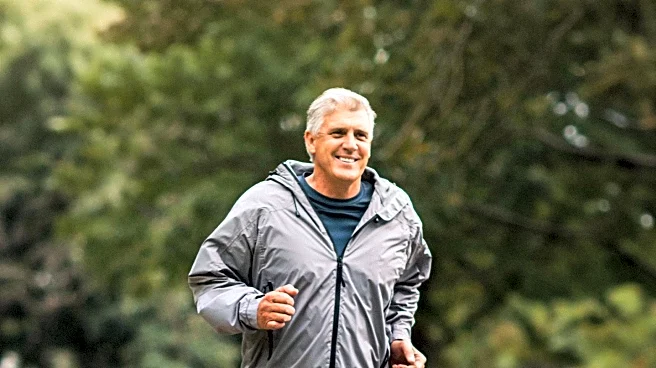
Dr. Amir Khan, an NHS GP, has outlined five essential habits for individuals over the age of 35 to promote healthy aging. These habits include getting morning light, boosting VO2 max daily, monitoring blood pressure, training balance, and building muscle and bone. Dr. Khan emphasizes that these practices are simple, require minimal time, and do not necessitate special equipment. The habits are designed to address changes in the body that occur after 35, such as decreased efficiency in the heart's ability to pump blood and the mitochondria's ability to use oxygen. By incorporating these habits, individuals can improve their overall health and reduce the risk of age-related conditions.
Why It's Important?
The significance of these recommendations lies in their potential
to improve long-term health outcomes for individuals over 35. As people age, they face increased risks of cardiovascular issues, muscle loss, and balance problems, which can lead to serious health complications. By adopting these habits, individuals can enhance their cardiovascular health, maintain muscle mass, and improve balance, thereby reducing the risk of falls and other injuries. Additionally, monitoring blood pressure can help detect hypertension early, preventing strokes and heart attacks. These practices offer a proactive approach to aging, empowering individuals to take control of their health and potentially extend their lifespan.
What's Next?
Individuals interested in implementing these habits should start by incorporating them into their daily routines. For example, spending a few minutes in morning light can help reset the body's circadian rhythm, while short bursts of intense exercise can boost VO2 max. Regular blood pressure monitoring can provide valuable insights into cardiovascular health, and simple balance exercises can be done at home. As these habits become part of daily life, individuals may notice improvements in energy levels, sleep quality, and overall well-being. Healthcare professionals may also consider recommending these practices to patients as part of a comprehensive approach to healthy aging.