






What's Happening?
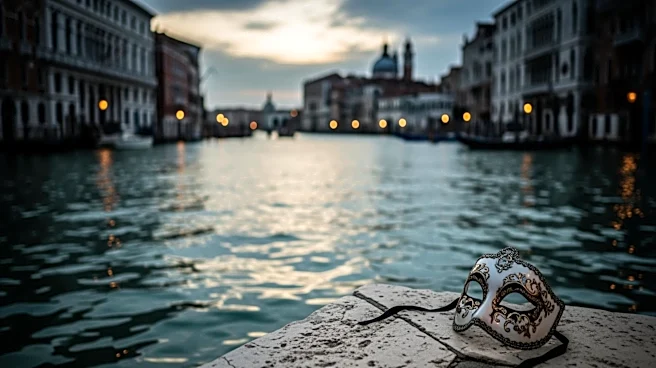
Jordan Roth, a multi-disciplinary artist from the United States, recently captivated audiences at the Venice Biennale with a unique performance. Known for his 'living sculpture' appearance at the Met Gala in New York, Roth continued to impress with a performance at Palazzo
dei Fiori, a Renaissance Venetian palazzo. The event was organized in collaboration with Performance Space New York’s Visionaries Circle patrons group and attended by notable figures from the art world, including Scott Rothkopf, director of the Whitney Museum of American Art, and Kristin Hjellegjerde, a London-based dealer. Roth's performance involved tearing apart vinyl prints of the 16th-century polymath Irene di Spilimbergo, which were affixed to a glass pane in a custom gilt frame. He then reassembled the fragments into collages, accompanied by classical music, creating a fusion of muse and artist.
Why It's Important?
This performance by Jordan Roth highlights the evolving nature of contemporary art, where traditional boundaries are being pushed and redefined. By integrating elements of performance art with classical themes, Roth's work challenges conventional perceptions of art and its presentation. The presence of influential art figures at the event underscores the significance of such performances in shaping future art trends. This event also reflects the growing importance of interdisciplinary approaches in the art world, which can lead to new forms of artistic expression and engagement with audiences.
What's Next?
Following this performance, it is likely that Jordan Roth will continue to explore and expand his artistic repertoire, potentially influencing other artists to adopt similar interdisciplinary methods. The success of this event may encourage more collaborations between artists and institutions, fostering a more dynamic and inclusive art scene. Additionally, the impact of such performances on the art market could lead to increased interest and investment in contemporary and performance art.
Beyond the Headlines
Roth's performance at the Venice Biennale not only showcases his artistic talent but also raises questions about the role of art in society. By blending historical references with modern techniques, Roth invites audiences to reconsider the relationship between past and present in art. This approach may inspire discussions about the preservation of cultural heritage and its reinterpretation in contemporary contexts, highlighting the ongoing dialogue between tradition and innovation in the art world.