




What's Happening?
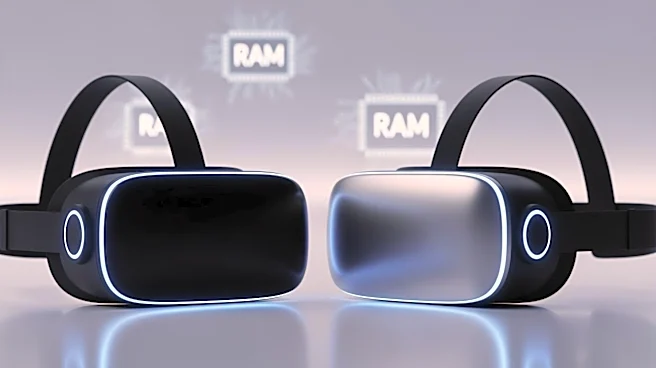
Meta has announced a price increase for its virtual reality headsets, the Quest 3 and Quest 3S, due to a global shortage of memory chips. Starting April 19, the price of the Meta Quest 3S (128GB) and Meta Quest 3S (256GB) will rise by $50, reaching $349.99
and $449.99, respectively. The Meta Quest 3 will see a $100 increase, bringing its price to $599.99. This decision comes as the cost of producing high-performance VR hardware has escalated significantly, driven by the surge in prices of critical components, particularly memory chips. Meta has stated that this adjustment is necessary to continue delivering quality hardware, software, and support expected from the Quest platform. The price hike will also affect refurbished units, although accessories will remain at their current prices.
Why It's Important?
The price increase of Meta's VR headsets highlights the broader impact of the global semiconductor shortage on consumer electronics. As memory chips become more expensive, companies across the tech industry, including giants like Samsung, Microsoft, and Sony, are compelled to adjust their pricing strategies. This development underscores the vulnerability of tech supply chains and the potential for increased costs to be passed on to consumers. For Meta, maintaining the quality and performance of its VR products is crucial as it continues to invest in the metaverse, a strategic area for the company's future growth. The price adjustments may affect consumer demand and accessibility, potentially influencing the adoption rate of VR technology.
What's Next?
As Meta navigates the challenges posed by the RAM shortage, the company may need to explore alternative supply chain strategies or technological innovations to mitigate future disruptions. The tech industry as a whole might see increased collaboration with chip manufacturers to secure supply and stabilize prices. Consumers can expect continued fluctuations in electronics pricing until the semiconductor supply stabilizes. Meta's commitment to the metaverse suggests ongoing investment in VR and AR technologies, which could lead to further product developments and enhancements in the coming years.