





What's Happening?
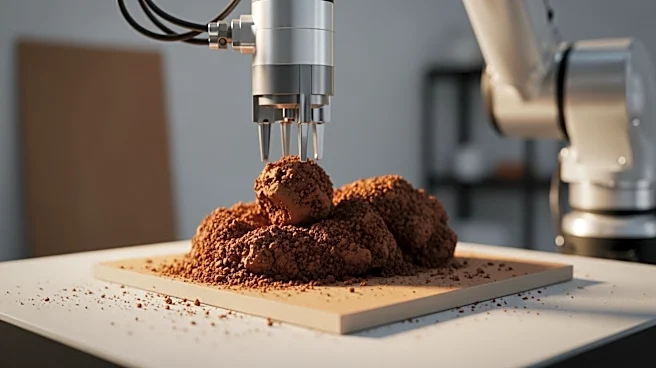
Researchers at ETH Zurich have introduced a new robotic additive manufacturing method aimed at enhancing sustainability in the construction industry. This innovative process, known as impact printing, utilizes earth-based materials such as clay and excavated
earth, eliminating the need for cement. The method involves a robot depositing material from above, which bonds together upon impact with minimal additives. This approach contrasts with traditional concrete 3D printing, which typically involves layering. The materials used are sourced locally, often from waste products, making the process both cost-effective and environmentally friendly. The method allows for the construction of full-scale, freeform structures, including walls and columns up to nearly 10 feet tall.
Why It's Important?
The development of this sustainable construction method is significant as it addresses the environmental impact of traditional building practices, particularly the use of cement, which is a major contributor to carbon emissions. By utilizing locally sourced, low-carbon materials, the method reduces the carbon footprint of construction projects. This innovation could lead to more sustainable building practices globally, potentially transforming the construction industry by reducing reliance on cement and promoting the use of renewable resources. The method's ability to create large structures quickly and efficiently also offers practical benefits for the construction sector, potentially lowering costs and increasing the speed of building projects.
What's Next?
As the method continues to be refined, it could see broader adoption in the construction industry, particularly in regions where sustainable building practices are prioritized. Future developments may include the use of a wider range of materials, further enhancing the method's versatility and environmental benefits. The construction industry may begin to integrate this technology into mainstream practices, potentially influencing building codes and regulations to support more sustainable construction methods. Additionally, the method's success could inspire further research and innovation in sustainable building technologies.