

What's Happening?
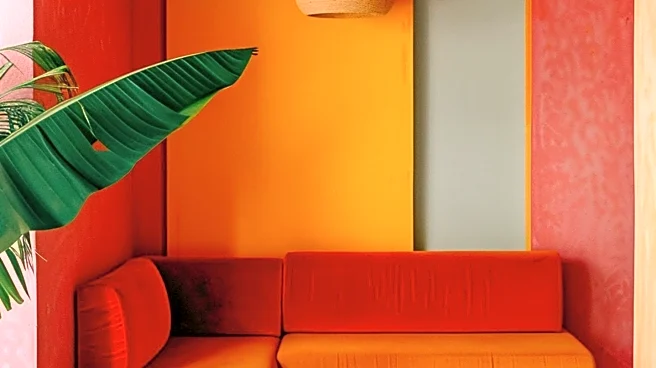
Interior design experts are forecasting a vibrant shift in color trends for 2026, moving away from the muted 'sad beige' tones that have dominated recent years. Designers like David Flack of Flack Studio in Melbourne anticipate a rise in earthy umber and brown-based colors, which are described as warm and grounding. These tones are expected to provide visual weight and anchor spaces, creating a cohesive flow throughout homes. Additionally, pistachio-chartreuse is highlighted as a striking and fun color that can be incorporated into interiors through small accents like rugs or throw pillows. This trend towards more colorful interiors reflects a broader embrace of multicolor aesthetics, as seen in recent fashion events like the Golden Globes.
Why It's Important?
The shift towards bolder colors in interior design signifies a cultural move away from minimalism and towards more expressive and personalized home environments. This trend could impact various sectors, including home decor retail, as consumers seek out new products to update their living spaces. The demand for vibrant colors may drive innovation in paint and textile industries, encouraging the development of new products that cater to these emerging preferences. For homeowners and real estate professionals, understanding these trends can be crucial for staging homes and appealing to potential buyers who are increasingly looking for unique and lively interiors.
What's Next?
As these color trends gain traction, we can expect to see a wider range of products and design services catering to this demand. Retailers may expand their offerings to include more colorful options, while interior designers might develop new strategies to incorporate these bold hues into existing spaces. Additionally, the trend could influence other areas of design, such as fashion and graphic design, as the appetite for vibrant colors grows. Industry professionals will likely monitor consumer reactions and adjust their approaches to align with these evolving preferences.
Beyond the Headlines
The move towards more colorful interiors may also reflect broader societal shifts towards individuality and self-expression. As people spend more time at home, there is a growing desire to create spaces that reflect personal tastes and provide comfort. This trend could also have psychological implications, as colors are known to affect mood and well-being. By embracing a wider palette, individuals may find new ways to enhance their living environments and improve their quality of life.