







What's Happening?
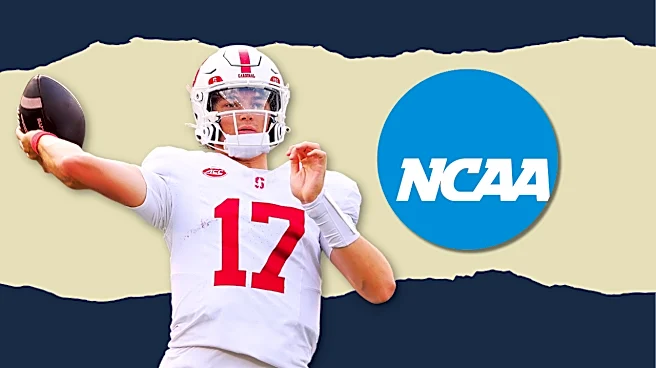
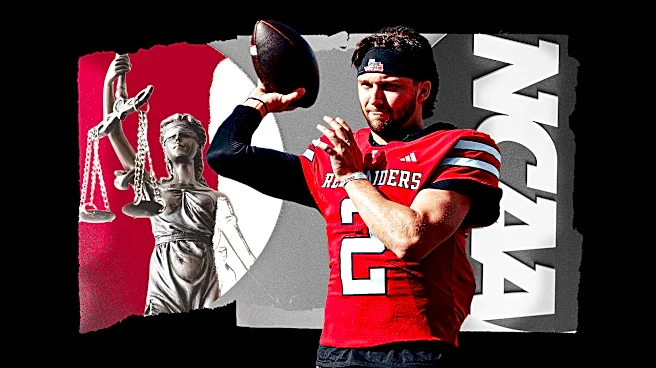
An antitrust lawsuit has been filed against the NCAA and four major athletic conferences, challenging the cap on name, image, and likeness (NIL) payments tied to a $2.8 billion settlement. The lawsuit, brought by two college football players, claims that
the NCAA and the conferences agreed to cap NIL payments despite knowing that such restrictions were prohibited under state laws in California and other states. This legal action presents a novel approach by attempting to unwind the settlement through a separate lawsuit rather than an appeal, which could allow for broader discovery and potential damages. The lawsuit was filed in the US District Court for the Northern District of California, and it comes a year after a federal court approved the settlement that allowed colleges to share revenue with student-athletes for the first time.
Why It's Important?
The lawsuit could have significant implications for the NCAA and the future of college athletics. If successful, it may lead to the unraveling of the $2.8 billion settlement, which was a landmark agreement allowing student-athletes to receive compensation for their NIL. This case highlights the ongoing tension between state laws and NCAA regulations, as well as the challenges in implementing a uniform policy across different jurisdictions. The outcome could affect how college sports are governed and how student-athletes are compensated, potentially leading to more legal challenges and changes in NCAA policies. It also underscores the need for federal legislation to address the discrepancies between state laws and NCAA rules.
What's Next?
The NCAA and the other defendants are expected to argue that the plaintiffs cannot bring an antitrust claim due to the release of such claims in the settlement. They may also invoke the Noerr-Pennington doctrine, which provides immunity for parties attempting to influence governmental action. The case could lead to further legal battles and possibly prompt Congress to consider legislation that would preempt state laws and provide a clearer framework for NIL compensation. The outcome of this lawsuit could set a precedent for future cases and influence the direction of college sports governance.