








What's Happening?
Volkswagen has announced a comprehensive sustainability strategy targeting net-zero emissions by 2050. The automaker plans to achieve a 90% reduction in greenhouse gas emissions from production operations by 2040, compared to 2018 levels. A key component
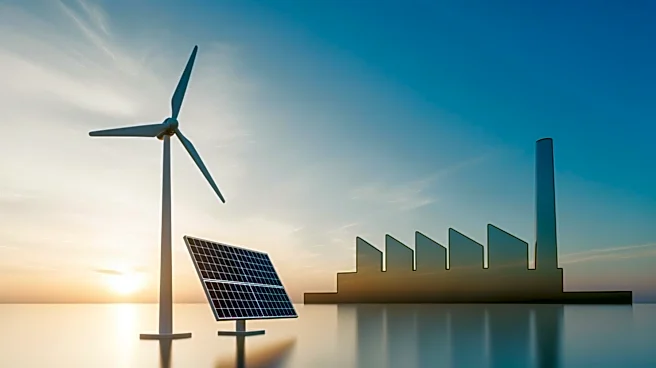
of this strategy is the commitment to sourcing 100% of external electricity from renewable sources by 2030. Volkswagen's Zero Impact Factory initiative aims to significantly reduce the environmental impact of its production facilities. The company is also advancing circular economy initiatives, aiming for 40% circular materials usage by 2040. Electric mobility is a major focus, with battery electric vehicles accounting for a growing share of deliveries.
Why It's Important?
Volkswagen's strategy positions it as a leader in sustainable mobility and industrial decarbonization. By aligning with the Paris Climate Agreement, the company is setting a benchmark for the automotive industry in terms of environmental responsibility. The shift to renewable energy and circular materials not only reduces environmental impact but also enhances Volkswagen's brand reputation and competitiveness in a market increasingly focused on sustainability. The strategy supports global efforts to combat climate change and could influence other automakers to adopt similar practices, accelerating the transition to a low-carbon economy.
Beyond the Headlines
Volkswagen's commitment to sustainability extends beyond emissions reduction. The company is investing in biodiversity protection and sustainable finance, with plans to finance a significant portion of its bond volume through green bonds. This holistic approach reflects a broader trend in corporate responsibility, where environmental, social, and governance (ESG) factors are becoming integral to business strategies. Volkswagen's initiatives could drive innovation in sustainable technologies and materials, contributing to long-term shifts in manufacturing and consumption patterns.