





What's Happening?
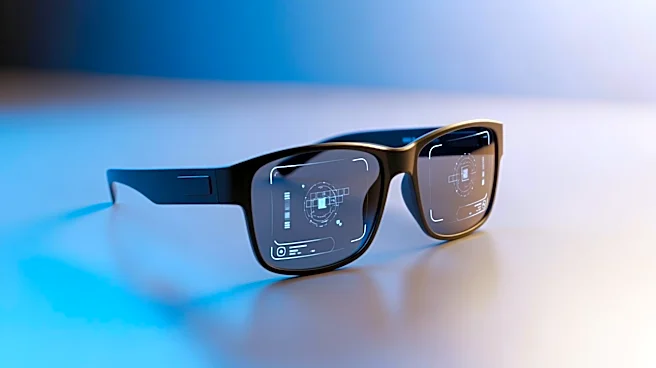
In 2026, the market for smart glasses is experiencing significant growth, driven by the mainstream adoption of Ray-Ban Meta Gen 2, which sold over 7 million pairs in 2025. This model has normalized the use of camera-equipped frames, featuring a 12-MP
camera, open-ear speakers, and multi-hour battery life. New entrants like Samsung's 'Galaxy Glasses' and Oakley's Meta Vanguard are expanding the market. Samsung's glasses, expected to be priced between $379 and $499, aim to make smart glasses more accessible. Oakley's Meta Vanguard targets athletes with features like action camera capabilities and Garmin integration. Privacy concerns are being addressed by models like Even Realities G2, which ships without a camera, focusing instead on a bright, text-first display. The year 2026 is pivotal for augmented reality (AR) wearables, with advancements in display brightness and affordability leading to broader adoption.
Why It's Important?
The rise of smart glasses in 2026 marks a significant shift in consumer technology, impacting both the eyewear industry and consumer electronics. The mainstreaming of AR wearables like Ray-Ban Meta Gen 2 indicates a growing acceptance of technology that integrates seamlessly into daily life. This trend could lead to increased competition among tech companies and eyewear manufacturers, driving innovation and potentially lowering prices. The introduction of privacy-focused models like Even Realities G2 highlights a growing consumer demand for technology that respects personal privacy, which could influence future product designs and regulations. The expansion of smart glasses into sports and fitness, as seen with Oakley's Meta Vanguard, suggests a diversification of use cases, potentially attracting new consumer segments and creating opportunities for partnerships with sports and fitness brands.
What's Next?
As smart glasses become more prevalent, we can expect further advancements in technology and design, potentially leading to even more affordable and feature-rich models. Companies may focus on enhancing battery life, display quality, and integration with other smart devices. The growing market could also prompt regulatory discussions around privacy and data security, especially for models equipped with cameras. Consumer feedback will likely shape future iterations, with manufacturers balancing functionality, privacy, and style. The success of these products could influence the development of other wearable technologies, further integrating AR into everyday life.
Beyond the Headlines
The increasing adoption of smart glasses raises questions about societal norms and etiquette, particularly concerning privacy and data collection. As more people wear devices capable of recording and displaying information, there may be a need for new social conventions and legal frameworks to address these issues. The technology also has the potential to change how people interact with their environment, offering new ways to access information and communicate. Long-term, the integration of AR into daily life could influence various sectors, including education, healthcare, and entertainment, by providing immersive and interactive experiences.