
What's Happening?
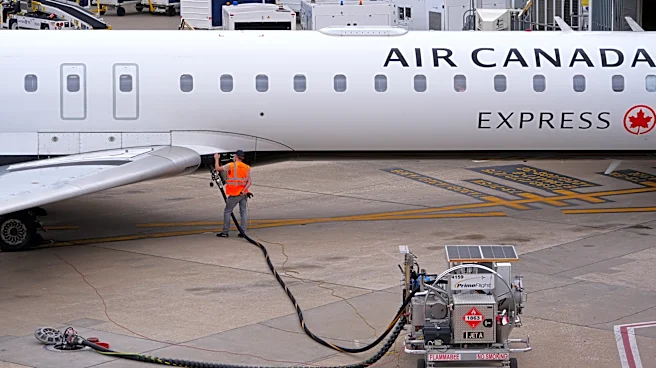
Air Canada has announced a temporary suspension of flights from Toronto and Montreal to New York’s John F. Kennedy Airport due to rising fuel prices. This decision is part of a broader trend where airlines
are adjusting their services in response to increased aviation fuel costs, which have surged following the US and Israel's conflict with Iran. Although the Strait of Hormuz has reopened, easing some oil price pressures, fuel costs remain high. Air Canada plans to pause these flights starting June 1, with a resumption expected on October 25. The airline will continue to operate flights to New York’s LaGuardia and Newark airports from various Canadian cities. Additionally, Air Canada is suspending its Salt Lake City-Toronto route and delaying the launch of a new service from Guadalajara to Montreal.
Why It's Important?
The suspension of flights by Air Canada highlights the significant impact of geopolitical tensions on the aviation industry. Rising fuel costs, driven by instability in the Middle East, are forcing airlines to reassess their routes and operations. This situation underscores the vulnerability of the airline industry to external economic and political factors. The decision affects not only Air Canada but also has broader implications for international travel and trade, potentially leading to increased ticket prices and reduced flight availability. Airlines like Spirit are seeking government assistance to cope with these challenges, indicating the severity of the financial strain on the industry.
What's Next?
Air Canada’s decision to suspend certain flights is likely to prompt other airlines to evaluate their operations and consider similar measures. The ongoing geopolitical situation in the Middle East could lead to further disruptions if fuel prices remain high. Airlines may continue to seek government support to mitigate financial losses. Passengers affected by these changes will need to adjust their travel plans, potentially opting for alternative routes or carriers. The industry will be closely monitoring developments in the Middle East and fuel market trends to make informed operational decisions.