
What's Happening?
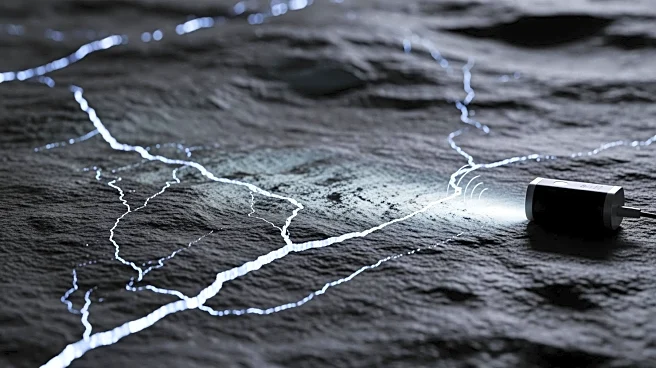
A recent study published in Scientific Reports highlights the use of microseismic (MS) monitoring technology to provide real-time insights into floor failure processes in extra-thick coal seam mining.
This technology offers a dynamic, data-driven method for evaluating water inrush risks in underground mines. The study was conducted in the Longwanggou Coal Mine, where high-sensitivity sensors captured vibration signals to analyze floor activity. The research integrated MS data into a quantitative risk model using the Analytic Hierarchy Process–Entropy Weight Method (AHP–EWM) to improve hazard assessment and decision-making. The study found that 92.92% of recorded MS events occurred in the floor strata, with some activity reaching deep into the Ordovician limestone, confirming significant disturbances from thick seam mining.
Why It's Important?
The use of MS monitoring technology in coal mining is crucial for enhancing miner safety and improving resource recovery. By providing real-time data on subsurface stress changes, this approach allows for more accurate predictions of water inrush hazards, which are a significant threat in mining operations. The integration of MS data into a structured risk assessment model supports more informed decision-making and resource planning. As coal mining operations face complex geological challenges, adopting such advanced monitoring techniques can lead to safer and more efficient mining practices, potentially reducing the risk of disasters and improving the sustainability of mining activities.