





What's Happening?
Scientists at Oak Ridge National Laboratory, a branch of the U.S. Department of Energy, have developed a new electrolyte using zwitterions for solid-state batteries. This innovation aims to replace traditional liquid electrolytes, which are commonly used
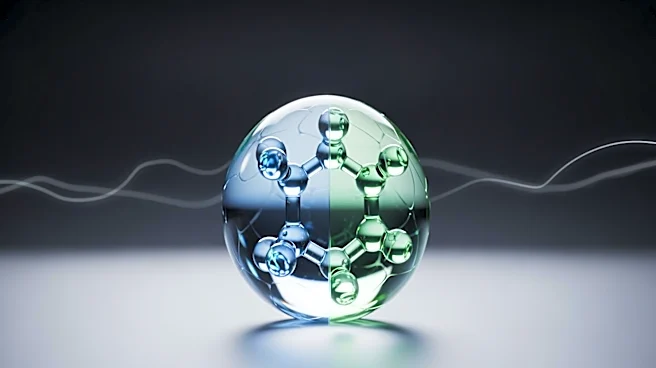
in electric vehicle batteries, with a solid material that enhances performance and safety. The new polymer electrolyte, featuring zwitterions, forms high-mobility pathways for ions, potentially improving ion conductivity without the drawbacks of liquid or ceramic materials. The research, published in the journal Materials Today, highlights the potential of this technology in decarbonization efforts, including applications in flow batteries and fuel cells.
Why It's Important?
The development of zwitterion-based electrolytes could significantly impact the electric vehicle industry by providing a safer and more efficient alternative to current battery technologies. Solid-state batteries are known for their potential to reduce fire hazards, lower costs, and improve energy density. This advancement could accelerate the transition to electric vehicles, supporting broader decarbonization goals. Additionally, the technology's application in other energy systems could enhance the efficiency and sustainability of various decarbonization technologies, contributing to the U.S.'s energy independence and environmental objectives.
What's Next?
The research team at Oak Ridge plans to continue exploring the fundamental mechanisms that enable the superionic nature of the polymer electrolyte. As the technology progresses, it may attract interest from private sector innovators and lead to partnerships aimed at commercializing solid-state batteries. Companies like Quantumscape and Solid Power are already working on similar technologies, indicating a competitive landscape that could drive further advancements and adoption of solid-state batteries in the automotive industry and beyond.