





What's Happening?
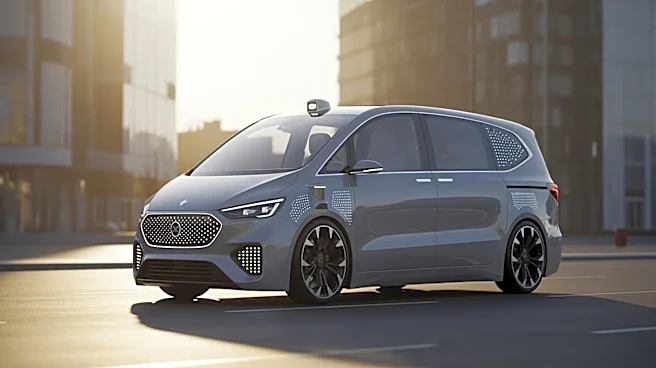
Uber and Volkswagen have initiated on-road testing of their autonomous ID Buzz vehicles in Los Angeles. This marks a significant step towards launching a robotaxi service on the Uber app, expected to be available later this year. The testing phase involves
human operators supervising the self-driving minivans as they navigate the streets. MOIA America, a Volkswagen Group company, is responsible for developing the autonomous vehicle technology and plans to expand the fleet to over 100 vehicles during the test period. The companies aim to eventually deploy thousands of these vehicles across multiple U.S. markets, supporting their shared goal of introducing driverless ride-hailing services.
Why It's Important?
The introduction of autonomous vehicles by Uber and Volkswagen could significantly impact the ride-hailing industry by reducing operational costs and potentially lowering ride prices for consumers. This development also addresses concerns about traffic congestion, as shared autonomous rides could optimize vehicle usage. The collaboration between Uber and Volkswagen highlights a growing trend towards automation in transportation, which could reshape urban mobility and reduce reliance on human drivers. This shift may also influence regulatory frameworks and public acceptance of autonomous technology.
What's Next?
As testing progresses, Uber and Volkswagen plan to expand their robotaxi service to more cities over the next decade. The companies will likely focus on refining the technology and ensuring safety standards are met before a broader rollout. Stakeholders, including city planners and regulators, will need to address infrastructure and policy changes to accommodate autonomous vehicles. Public response and adoption rates will also play a crucial role in determining the success of this initiative.