



What's Happening?
Publicly listed Bitcoin mining companies have collectively sold over 15,000 Bitcoins since October 2025 due to declining prices and squeezed profit margins. This strategic retreat is marked by a shift in focus from Bitcoin mining to selling electricity
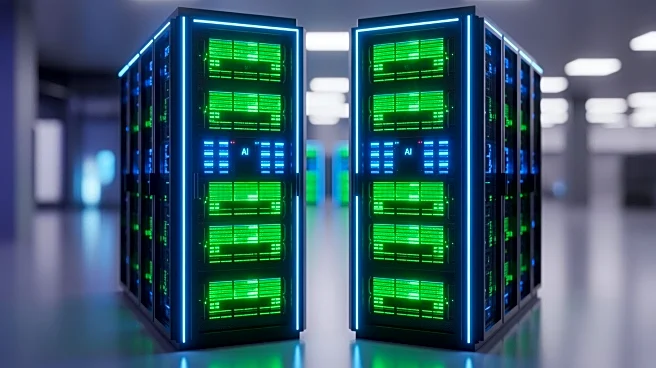
to AI data centers. Companies like Core Scientific and MARA have liquidated significant portions of their Bitcoin holdings to invest in AI infrastructure. Core Scientific, for instance, sold approximately 1,900 Bitcoins in January 2026, using the proceeds to transform its mining farms into AI hosting facilities. Similarly, MARA authorized the sale of all its 53,822 Bitcoins, amounting to nearly $4 billion, to fund a joint venture with Starwood Capital for AI data center capacity. This move reflects a broader trend among miners to capitalize on the growing demand for AI data centers, which offer more stable and predictable cash flows compared to the volatile cryptocurrency market.
Why It's Important?
The shift from Bitcoin mining to AI data centers signifies a major transformation in the cryptocurrency mining industry. As Bitcoin prices have fallen, mining has become less profitable, prompting companies to seek alternative revenue streams. The demand for AI data centers is rapidly increasing, driven by the need for high-density computing power. This transition allows mining companies to leverage their existing infrastructure and expertise in electricity management to tap into a more lucrative market. The move also reflects a strategic pivot towards long-term sustainability, as AI hosting contracts provide stable cash flows and reduce exposure to cryptocurrency price volatility. This trend could reshape the landscape of digital infrastructure, with significant implications for the future of both the cryptocurrency and AI industries.
What's Next?
As mining companies continue to transition to AI data centers, we can expect further investments in AI infrastructure and potential partnerships with tech giants seeking reliable data hosting solutions. The success of this strategy will depend on the ability of these companies to effectively manage the transition and capitalize on the growing demand for AI services. Additionally, the shift may influence the broader cryptocurrency market, as the reduction in Bitcoin mining activity could impact the network's hashrate and security. Stakeholders, including investors and policymakers, will be closely monitoring these developments to assess their implications for the digital economy.